Tromsø and Finnmark
Beyond the Arctic Circle, Tromsø opens the hunt for auroras and whales, while Finnmark unfolds the Sami tundra all the way to North Cape at 71° north.
Tromsø and Finnmark form the northern tip of continental Norway, a territory stretching nearly 800 km beyond the Arctic Circle, from Lyngen fjord to the Russian border at Kirkenes. Our team works there year-round and we structure itineraries around two distinct logics: Tromsø as a scientific and urban base, Finnmark as a Sami plateau and Arctic coastline. The two combine well over 7 to 10 days, rarely less.
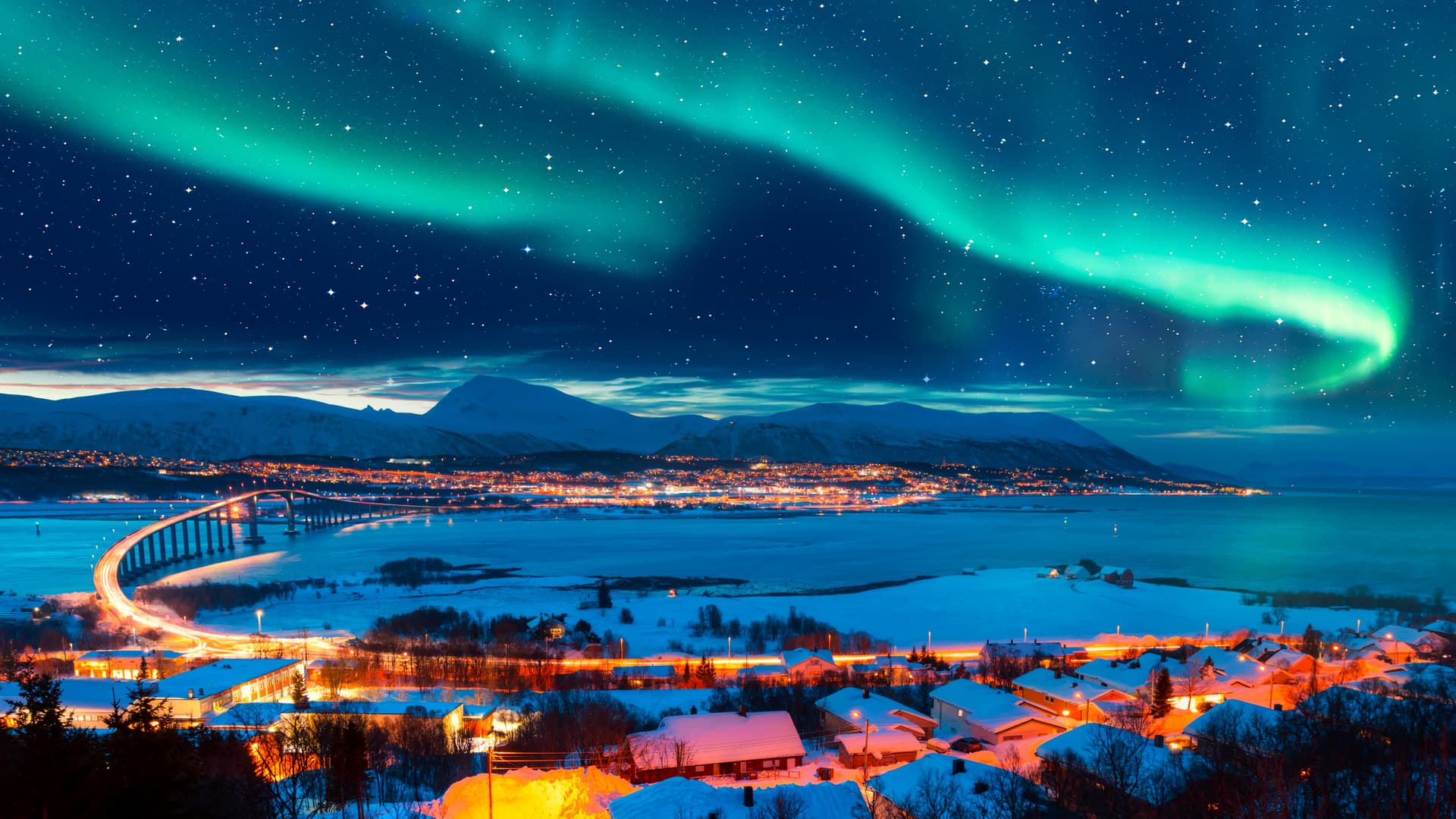
Tromsø, with 75,000 inhabitants, occupies an island connected to the mainland by the bridge leading to the Arctic Cathedral of Ishavskatedralen, completed in 1965. The city is home to the world's northernmost university, an aurora observatory attached to the Nordlysobservatoriet, and a port from which boats depart to Skjervøy from November to mid-January to observe humpback whales and orcas following herring schools. In the city center, the Storgata quarter lines 19th-century painted wooden houses, the Polar Museum tells the story of Amundsen and Nansen's expeditions, and local breweries like Mack serve beer brewed on-site since 1877.
To the north and east lies Finnmark, Norway's largest and least densely populated county in Europe, with 1.5 inhabitants per km². This is where most of the Norwegian Sami people live, about 40,000 people spread between the inland municipalities of Kautokeino and Karasjok, and the villages along the Barents Sea coast. Karasjok is home to the Sámediggi, the Sami parliament inaugurated in 2000 in a wood and copper building designed by Stein Halvorsen. Kautokeino is the center of reindeer herding: 100,000 animals migrate there each year between winter pastures inland and the coast in summer. The Easter festival in Kautokeino, late March to early April, brings together reindeer races, joik concerts and the world lasso championship.
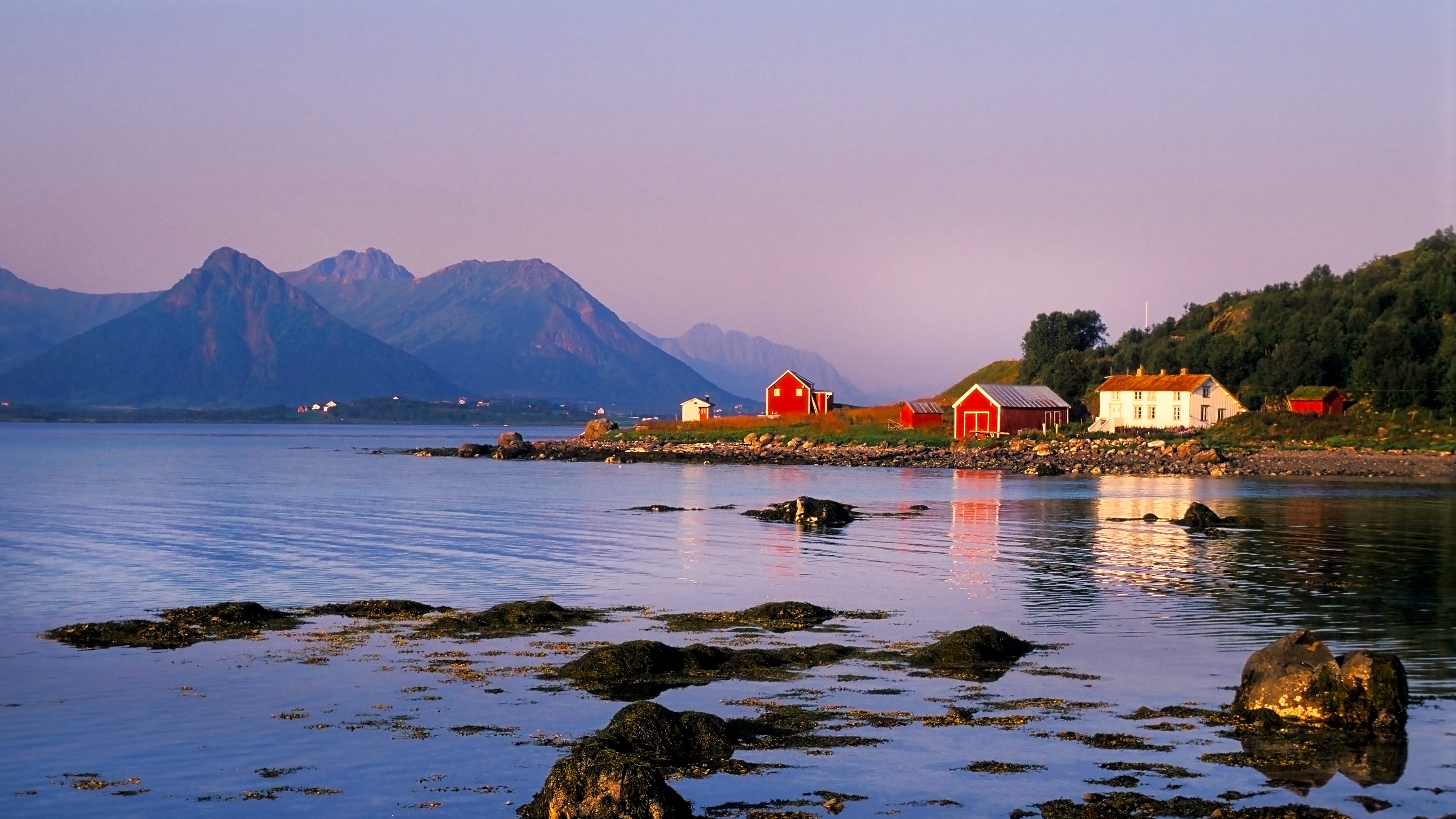
Finnmark's coast traces a string of wind-battered peninsulas. Honningsvåg serves as the gateway to North Cape, the Nordkapp, a 307-meter cliff marking the northernmost point accessible by car in continental Europe, at 71°10' north latitude. Further east, Kirkenes touches the Russian border and is the terminus of the Hurtigruten coastal express, which serves the entire coast from Bergen in six days. Between the two, the fishing villages of Berlevåg, Båtsfjord and Vardø live off cod, Kamchatka king crab introduced in the 1960s, and a polar tourism that remains confidential.
Climate dictates everything. In Tromsø, the influence of the Gulf Stream keeps winter temperatures between -4°C and -10°C on average, with peaks at -15°C. In the interior of Finnmark, around Karasjok or Kautokeino, the thermometer regularly drops to -25°C, sometimes -35°C in January-February. Polar night lasts from late November to mid-January beyond 70° north. Conversely, the sun never sets from mid-May to late July, opening unusual hiking and kayaking windows at 2 am under slanting light.
On the culinary front, local cuisine relies on reindeer (bidos, Sami stew served with potatoes and lingonberries), dried fish (tørrfisk), farmed salmon from Senja, and cloudberry (multebær), an orange berry harvested in late August from peatlands. Several of our hosts in Karasjok and Kautokeino prepare these dishes in lavvu, traditional Sami tents, during evenings that are an integral part of the journey rather than folksy theater.
To discover
Northern lights from Ersfjord. Thirty minutes from Tromsø, Ersfjord offers a clear northern horizon and minimal light pollution. Our guides adjust the observation point each night according to KP forecasts and cloud cover, from late September through late March.
Humpback whales of Skjervøy. From early November to mid-January, herring move into the Skjervøy fjords, attracting humpback whales and orcas. Boat excursion in a hybrid vessel departing from Tromsø, 4 to 5 hours on the water with marine biologists on board.
Sami plateau of Finnmarksvidda. Between Kautokeino and Karasjok, the interior plateau unfolds 300 km of tundra at 300-500 meters altitude. Dog sledding over 2 days, overnight in a lavvu, and a visit to a reindeer herding operation with a Sami family we've worked with for eight years.
North Cape in winter. From Honningsvåg, 34 km of road often escorted by convoy in January-February to reach the Nordkapp cliff. The metal globe marking 71°10' north takes on full meaning when you arrive there in -20°C weather and 80 km/h winds.
Sami Parliament of Karasjok. Guided tour of the Sámediggi and the RiddoDuottarMuseat museum which traces the history of the Sami people, 20th-century Norwegian assimilation policy and current issues around herding lands.
When to go
The region is lived in two distinct seasons. Winter, from late September to late March, concentrates most demand for northern lights, dog sledding, snowmobiling and ice fishing. December to February offer the longest nights but also the harshest temperatures: expect -5°C in Tromsø and -20 to -30°C on the Finnmarksvidda plateau. October-November and late February-March are interesting compromises, with days still lit for a few hours and equivalent aurora viewing conditions. Our team systematically provides extreme cold suits, boots and mittens for any outdoor activity lasting more than two hours.
Summer, from mid-May to late July, brings the midnight sun, temperatures between 10 and 18°C on the coast, and access to hikes impossible in winter: Lyngsalpene, Senja island, Finnmark plateau on foot. August remains viable but nights become dark again and the first frosts arrive inland. April and early May are best avoided for most activities: snow melts, trails become muddy, operators close, and auroras stop being visible around April 10 due to light.
Practical advice
Allow a minimum of 5 days for Tromsø and its surroundings (auroras, whales in season, Sommarøy island, Lyngen fjord). To add the interior Finnmark and North Cape, plan 8 to 10 days total, as distances are real: 500 km between Tromsø and Alta, 220 km more between Alta and Karasjok, and 240 km from Alta to Honningsvåg. Tromsø-Langnes airport is the main entry point, with daily flights from Oslo in 1h55. For Finnmark, reach Alta, Lakselv or Kirkenes via Widerøe or SAS domestic flights.
The region combines well with the Lofoten and Vesterålen, accessible from Tromsø by plane in 40 minutes or via Hurtigruten in 24 hours. Coupling with Svalbard is possible but should be thought of as two separate trips to chain together, with a Tromsø-Longyearbyen flight of 1h45. Expected comfort ranges from simple but heated Sami lodges to design hotels in Tromsø (Clarion The Edge, Scandic Ishavshotel). This destination appeals more to contemplatives, photographers, lovers of wide-open spaces and travelers curious about indigenous cultures. Children from age 8 enjoy it in winter for dog sledding, provided they accept the cold and short days.