Stockholm
Stockholm
Just an hour from Oslo, Stockholm naturally extends your Scandinavian journey between archipelago, royal palaces and Swedish way of life. Our complete guide.
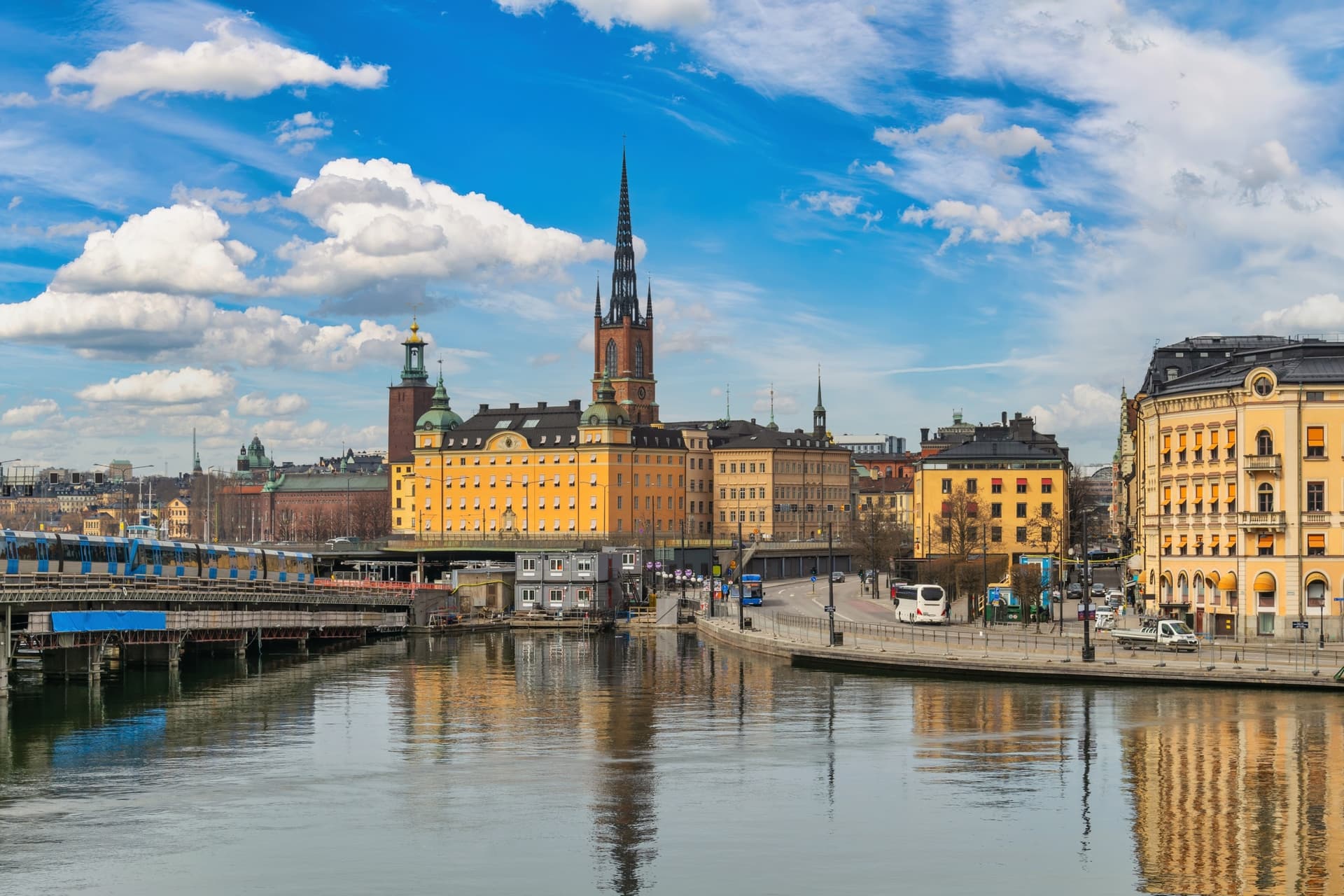
An hour's flight from Oslo, Stockholm naturally extends a stay in Norway. Nicknamed the "Venice of the North," Sweden's capital stretches across lakes, forests and the Baltic Sea, at the heart of an archipelago of nearly 30,000 islands. Here, nature and culture meet at every turn: cobblestone streets, royal palaces, renowned museums and maritime landscapes invite you to experience authentic Scandinavia, from Norwegian fjords to Swedish islets.
Stockholm's History
Founded in the 13th century to protect access to Lake Mälaren and control maritime trade, Stockholm quickly became a strategic hub, member of the Hanseatic League and official capital by 1419. Its development brought the construction of palaces, religious buildings and civic structures that still shape its character today. The city's history remains deeply tied to the sea, much like many Norwegian cities.
Stockholm Today
A modern, dynamic and green capital, Stockholm blends preserved heritage with innovation. Honored as European Capital of Culture in 1998 and "green capital" in 2010, it captivates through its vibrant neighborhoods, diverse museums and ecological initiatives. It's also a major Scandinavian tech hub, like Oslo, yet with its own distinctive maritime and cultural identity.
What to Discover in Stockholm?
Stockholm's soul reveals itself through a blend of medieval heritage and royal architecture, enhanced by prestigious museums. Among the must-sees:
- Gamla Stan: 13th-century old town, cobblestone streets, colorful facades, Royal Palace and cathedral.
- City Hall (Stadshuset): iconic red-brick building famous for hosting the Nobel banquet, with panoramic views from its tower.
- Royal Palace: official residence of the King, featuring grand apartments and museums.
- Drottningholm Palace: UNESCO site with Baroque gardens and an 18th-century theater.
- Djurgården Island: a cultural hub featuring the Vasa Museum, Skansen, ABBA Museum and Nordic Museum.
- National Museum and Moderna Museet: art collections from the Renaissance to contemporary works.
- Fotografiska: an international photography landmark.
What to Do in Stockholm?
The capital is lived as much as it is visited. Here are some experiences to immerse yourself in its way of life:
- Archipelago cruise: escapes to Fjäderholmarna, Vaxholm or other islands accessible from the center.
- Monteliusvägen walk: exceptional panoramas over Lake Mälaren and City Hall.
- Summer swimming: urban beaches at Långholmen or Tantolunden.
- Fika: savoring coffee and pastries in a cozy café.
- Östermalms Saluhall market: fresh produce and local specialties.
- Royal urban national park: walks and cycling through the city.
- Skansen: activities and recreations of traditional trades.
- ABBA Museum: playful immersion into the band's universe.
When to Visit?
Stockholm benefits from a temperate climate thanks to the Gulf Stream and can be visited year-round:
- Summer (June–August): mild temperatures (59–73 °F), long daylight hours ideal for walks and cruises. The busiest and most frequented season.
- Winter (December–February): pronounced cold but magical atmosphere with Christmas markets, ice skating and winter cruises. March offers more sunshine and outdoor activities.
- Spring and autumn: peaceful atmosphere, temperatures between 34–59 °F, festivals and stunning seasonal colors.
From Norway, several transportation options make it easy to reach Sweden's capital. Your choice will depend on priorities: speed, comfort, budget or travel flexibility.
- Plane: Direct flight Oslo–Stockholm in approximately 1 hour 35 minutes, the quickest solution.
- Train: Around 6 hours of travel, with superb views across Scandinavia.
- Bus: The most economical option, approximately 7 hours 30 minutes.
- Car: Approximately 319 miles for a 6-hour 13-minute journey, ideal for a flexible road trip.
The city is pleasant to explore thanks to its excellent transport network:
- On foot: perfect for the center and Gamla Stan.
- Bike: numerous cycling paths and seasonal rental services.
- Metro (Tunnelbana): fast and convenient, stations decorated like art galleries.
- Tram: serves notably Djurgården and its museums.
- Urban buses: dense network, less intuitive than the metro.
- Tourist buses: hop-on/hop-off circuits connecting major sites.
- Boats and ferries: essential for the archipelago.
- Cruises: guided excursions, often included in the Stockholm Pass.
- Taxis: useful at night or to the airport.
Want to discover this destination?
Our local advisors design your tailor-made trip.