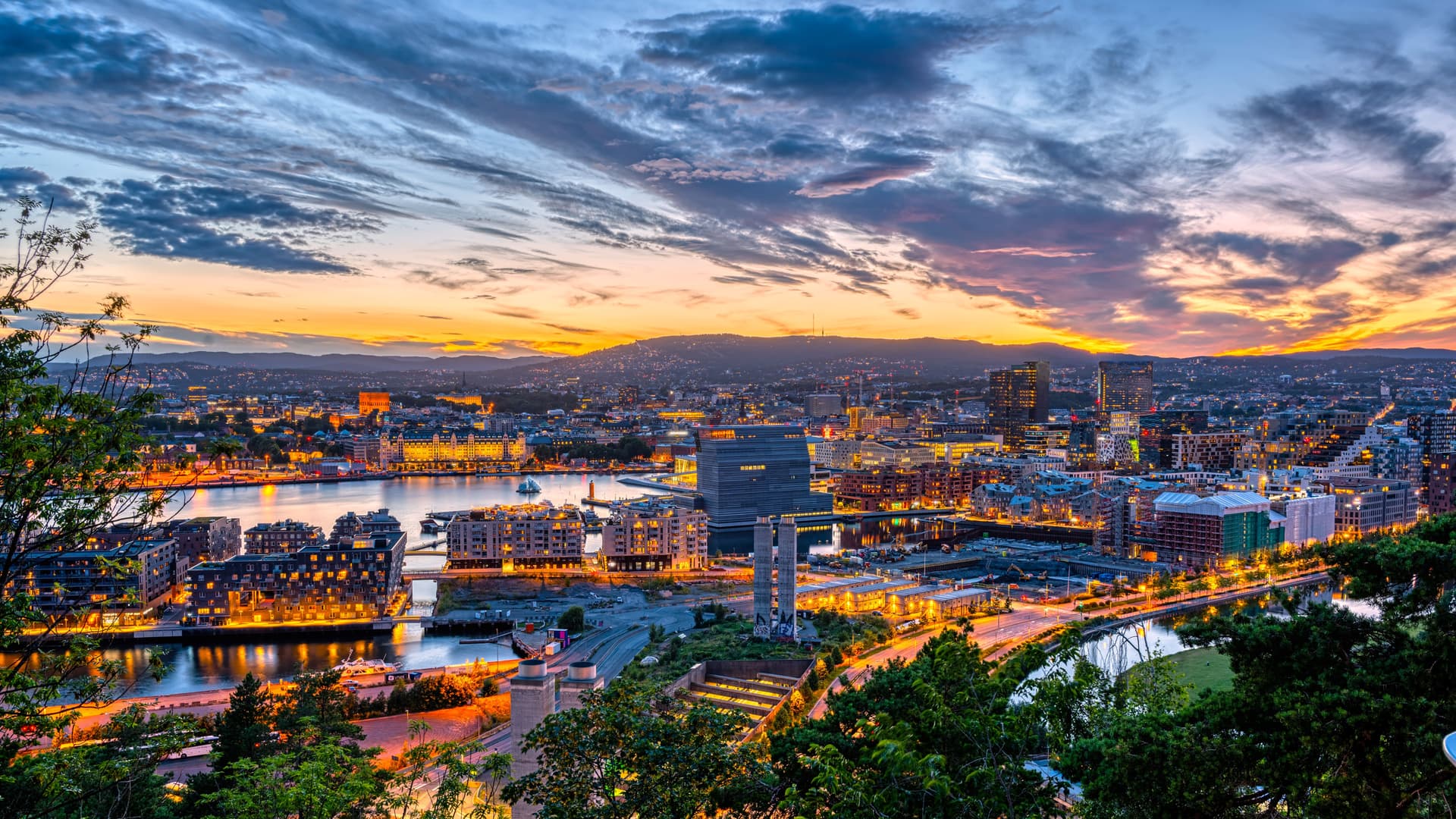
Oslo and the Østlandet
Eastern Norway brings together the capital Oslo, its polar museums on Bygdøy, the Nordmarka forests and the rural valleys of Telemark and Gudbrandsdalen as far as Røros.
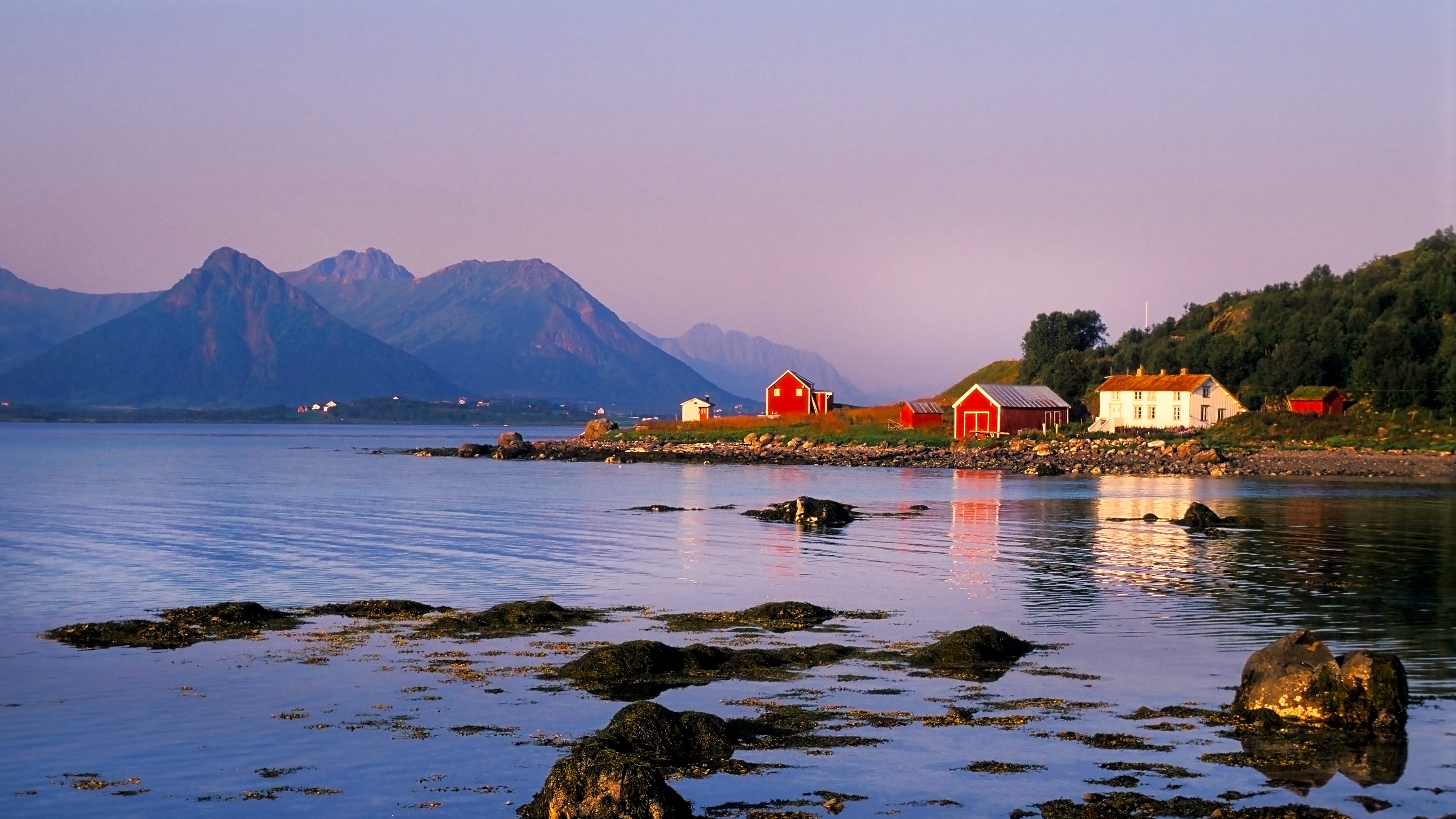
The Østlandet, literally the land of the east, covers nearly a third of mainland Norway and concentrates half the country's population around the Oslo fjord. Our agency is based in the capital, a few streets from the Opera House, whose Carrara marble roof descends to the water's edge. The region is organized around three major valleys carved by glaciers: the Gudbrandsdalen to the north towards Lillehammer, the Numedal in the centre, and the Telemark to the south-west, each with its log cabins painted in traditional Falun red and its standing stave churches.
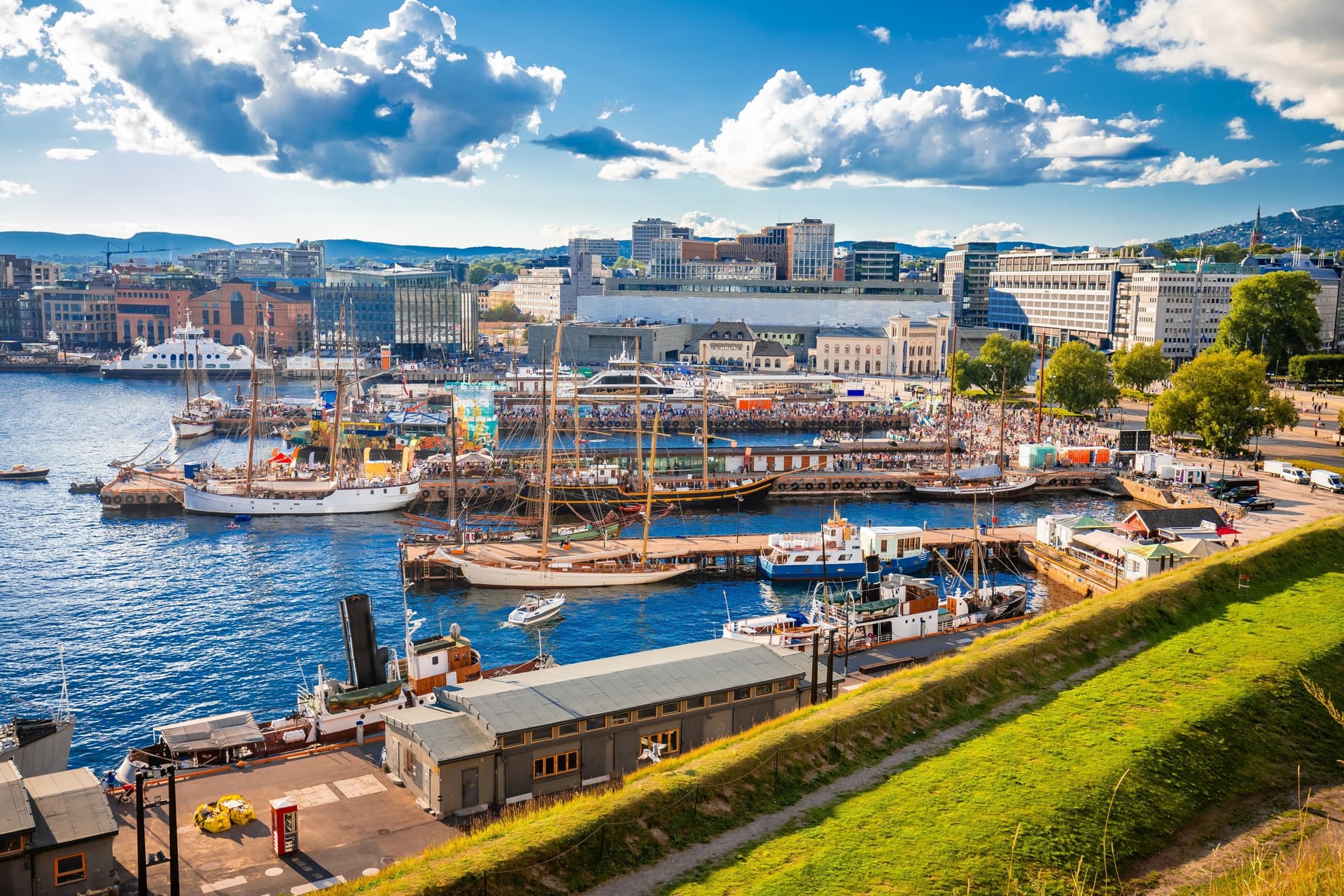
Oslo fits within a compact footprint. From Akershus fortress to the Aker Brygge district, then to the new Munch museum and Vigelandsparken with its 200 sculptures, you can cross the city on foot in a day. The Bygdøy peninsula, accessible by ferry from Rådhusbrygge dock in fifteen minutes, brings together the Fram museum (the polar ship of Amundsen and Nansen), the Kon-Tiki, and the Viking Ship Museum, which is scheduled to reopen after extensive renovation. North of the city, the Nordmarka begins at Frognerseteren metro station: 430 km² of pine forests and lakes where locals come to ski in winter and pick blueberries in August.
Moving away from the capital, rural Norway appears quickly. Two and a half hours' drive to the south-west, the Heddal stavkirke, built in the early 13th century, is the largest of the 28 standing stave churches still preserved in the country. The neighbouring Telemark, crossed by a canal of the same name pierced with locks in 1892, connects Skien to Dalen over 105 km through lakes and forests. To the north-east, after six hours' drive or a train journey via Hamar, the mining village of Røros, a UNESCO heritage site, preserves its 80 timber houses blackened by smelter smoke and its stone church from 1784, at 630 m altitude on a windswept plateau.
The Østlandet has a continental climate, drier than the west coast. Oslo enjoys mild summers of 20-22°C in July, sometimes reaching 28°C during recent heat waves, and winters averaging -5°C in January, dropping to -15°C in the Gudbrandsdalen. Snow generally lies from mid-December to the end of March at higher elevations around Lillehammer and Geilo. This winter reliability explains the hosting of the 1994 Olympic Games and the maintenance of over 60 cross-country ski resorts in the region.
Local cuisine is built on products you'll find at the stalls of Mathallen, Oslo's food market: smoked elk, brown mysost cheese made from whey, cured gravlaks salmon, and rakfisk, fermented trout from the Valdres traditionally served in November. Local festivals still structure the valleys: the Røros market in February, 170 years old, attracts 80,000 visitors over three days around sledges and Sør-Trøndelag produce. In Lillehammer, the Norsk Litteraturfestival gathers writers and readers each May around the home of Sigrid Undset, 1928 Nobel Prize winner.
For the traveller, the Østlandet often serves as a gateway and transition point. Gardermoen International Airport, 50 km north of Oslo, welcomes the majority of long-haul flights. From there, the Bergensbanen train heads west and crosses the Hardangervidda plateau at 1,222 m altitude in seven hours, one of the highest railway routes in Northern Europe. Our English-speaking team typically organizes it as the first or last link in a Norwegian itinerary, framing a more adventurous stay in the fjords or the north.
Must-see attractions
Bygdøy and the polar museums. Half a day on the peninsula 15 minutes by ferry from central Oslo, between the Fram of Amundsen preserved in its original hangar and the Viking longships from the 9th-century burials of Oseberg and Gokstad.
Røros, a UNESCO-listed mining town. At 630 m altitude on the Sør-Trøndelag plateau, 80 timber cabins blackened by the smoke of the copper smeltery, which closed in 1977. In February, the great market fills the streets with sledges and dried meat stalls.
Heddal stavkirke. Norway's largest standing stave church, pine framework interlocked without nails, dated to the 1240s. 130 km south-west of Oslo, in a Telemark plain surrounded by still-working farms.
The Bergensbanen towards the west. Seven hours by train from Oslo to Bergen, including an hour and a half on the bare Hardangervidda plateau. Expect 50 tunnels and a high point of 1,222 m at Finse station, the starting point for spring ski crossings.
Nordmarka on foot or ski. 430 km² forest accessible in 25 minutes from the centre by metro line 1 to Frognerseteren. Marked trails to the Kikutstua or Kobberhaughytta lodges, open year-round with catering.
When to visit
The best time to visit Oslo and its hinterland stretches from late May to mid-September. In June and July, temperatures oscillate between 18 and 22°C in Oslo, 15 to 18°C in the Gudbrandsdalen, with evenings still bright until 11pm. Rainfall remains moderate, around 80 mm per month on average, higher in August. September brings autumn colours to the birch forests, with daytime temperatures of 12-15°C and already cold nights.
Winter, from December to March, is a season in its own right, to be favoured if you're looking for cross-country skiing, Christmas markets in Oslo (Spikersuppa square) or nights in Røros. Temperatures in Oslo hover around -5°C, regularly dropping to -15°C in the interior valleys and reaching -25°C in Røros in January. Snow is reliable above 500 m from December to late March. We generally advise against April and early May: snow melts in the city, slopes close, and high-altitude hiking remains impractical due to lack of waymarking. November, dark and damp, attracts mainly travellers coming for rakfisk and literary festivals.
Practical tips
Allow a minimum of three full days for Oslo itself (centre, Bygdøy, Vigelandsparken, a forest excursion to Nordmarka) and five to six days if you wish to include the Telemark or a day trip to Lillehammer and Røros by train. The region is easy to navigate by public transport: the Vy network serves the main valleys, and car rental only becomes useful beyond the main railway lines, towards the Numedal farms or secondary roads in the Gudbrandsdalen. Gardermoen Airport is connected to central Oslo in 20 minutes by the Flytoget.
The Østlandet combines naturally with the Western Fjords via the Bergensbanen, or with Trøndelag by continuing to Trondheim by train from Røros (approximately 2.5 hours). For a first trip to Norway, our English-speaking team often proposes two or three days in Oslo as an opening, then the cross-country train to Bergen and the fjords. The region suits contemplative travellers, history enthusiasts, families (polar museums, Tusenfryd amusement park, gentle skiing at Oslo Vinterpark) and walkers looking for a soft format, with comfortable accommodation each evening. Comfort levels are high throughout: urban hotels in Oslo, historic timber inns in the valleys, family farm-hotels in Røros.