Vøringsfossen Waterfall
Vøringsfossen Waterfall
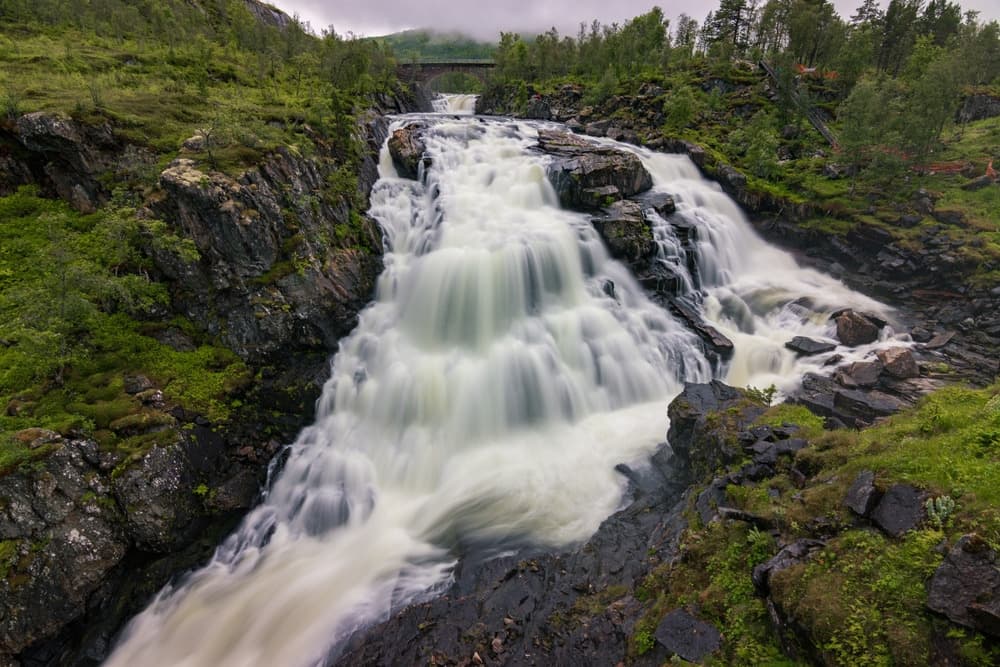
At the western edge of the Hardangervidda plateau, the Vøringsfossen waterfall plunges 182 m into the Måbødalen valley, near Eidfjord. Viewpoints, pedestrian bridge and hiking trails.
At the western edge of the Hardangervidda plateau, the Vøringsfossen waterfall cascades into the steep Måbødalen valley, close to the village of Eidfjord. With a total drop of 182 metres, it stands as one of Norway's most visited natural sites and features on one of the country's National Scenic Routes.
Why visit Vøringsfossen
Vøringsfossen combines three remarkable qualities: a spectacular vertical drop, a pristine geological setting in the glacial Måbødalen valley, and recent improvements that allow visitors to experience the waterfall from multiple vantage points without harming the landscape. Water flow remains steady even in peak summer thanks to hydroelectric regulation, which guarantees a minimum of around 12 m³/s during the tourist season.
The site is accessible by car from a car park perched above, or on foot via two well-marked hiking trails. Most visitors spend between 1 and 3 hours here, depending on whether they stick to the viewpoints or venture into the valley.
Site history
Long known only to local herders, the waterfall drew scientific attention in 1821 when Professor Christopher Hansteen attempted to measure its height. Precise measurements would not come until 1893, pinpointing the main free fall at over 160 metres, with the total vertical drop reaching 182 metres when including the lower cascades.
Tourism developed swiftly. By the 1880s, a hotel had been built at the top, reachable by a monumental staircase and an equestrian path from the valley. The opening in 1891 of a road with several tunnels carved into the cliff transformed access and opened the site to international travellers. Among them, composer Edvard Grieg, captivated by the place, helped spread its fame. Today, integrated into the Hardangervidda Norwegian Scenic Route, Vøringsfossen was enhanced in 2020 with a 47-metre pedestrian bridge featuring 99 steps that spans the canyon just above the falls.
What to see and do
Viewing platforms
The site features several observation decks connected by secure pathways. The pedestrian bridge opened in 2020 offers a dramatic vertical perspective of the fall, while the terraces near the hotel provide a more lateral view of the canyon. Everything is free to visit; only the car park requires a modest fee.
Hiking from Fossatromma
This 3.7 km one-way trail crosses rocky terrain through the Måbødalen valley. It allows you to approach the base of the waterfall and appreciate its scale from below. Allow 4 to 5 hours return, with sturdy footwear essential.
Hiking from Storegjel
Shorter at 1.7 km one-way, this route is accessible from mid-May to October. It offers a quicker approach while remaining challenging in sections. Outside the season, the trail may close for safety reasons.
Hardangervidda Nature Centre
Located in Øvre Eidfjord, this interpretation centre enriches your visit: plateau geology, wildlife including wild reindeer, and the history of herding routes. A worthwhile stop during poor weather.
Practical information
- Site access: free for viewpoints, parking fee applies nearby.
- Visit duration: 1 to 2 hours for the platforms, up to half a day including a hike.
- Safety: viewpoints feature guardrails, but unmarked areas around the falls have steep cliffs. Stay on marked trails.
- Equipment: closed footwear, windproof jacket (air is often humid from waterfall mist).
- Winter: some facilities close during cold season, but the site remains accessible from Bergen.
When to visit
May through October offers the best conditions: strong water flow from snowmelt, lush landscapes, open trails. July and August see peak crowds; early morning or late afternoon visits are preferable. In spring and early autumn, low-angle light particularly enhances the canyon's appearance.
In winter, the waterfall partially freezes and the landscape becomes austere. Daylight is limited to roughly 10am–3pm, and some platforms may close for safety.
Getting there
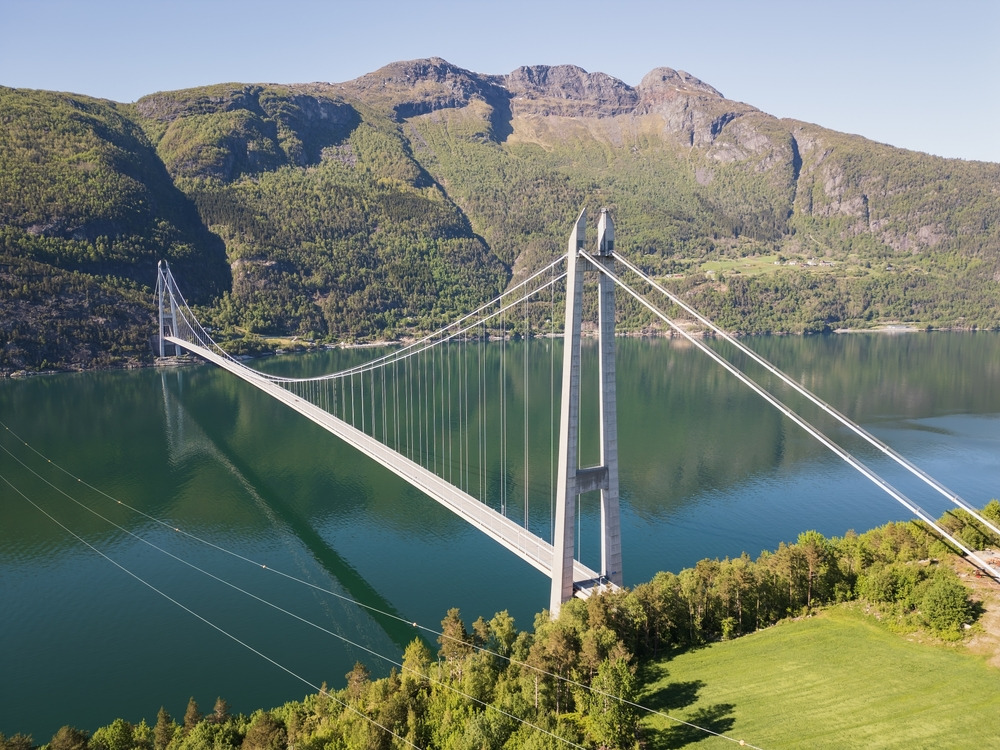
- From Bergen: approximately 3 hours' drive (173 km) via Voss and the Hardanger Bridge, one of Norway's longest suspension bridges. The descent to Måbødalen through a series of tunnels and switchbacks is part of the experience.
- From Geilo: 73 km via National Road 7, crossing the Hardangervidda plateau. This route is designated a National Scenic Route and ranks among the country's finest drives. The road may close temporarily in winter depending on weather.
- From Oslo: allow around 6 to 7 hours via Geilo and Road 7.
- By public transport: seasonal buses from Eidfjord and Voss in summer; outside this period, a private vehicle is needed.
Nearby attractions
- Voss: small town nicknamed Norway's extreme sports capital (whitewater rafting, indoor skydiving at VossVind, climbing park and zip-lining). A logical stop between Bergen and Vøringsfossen.
- Eidfjord: village on Hardangerfjord's shore, departure point for cruises and gateway to Hardangervidda National Park.
- Hardangerfjord: Norway's second longest fjord, lined with orchards, notably in Lofthus and Ulvik.
- Trolltunga: challenging but iconic hike accessible from Odda, roughly 2 hours' drive away.
Frequently asked questions
Frequently asked questions
Planning your Norwegian voyage
Vøringsfossen fits naturally into an itinerary combining western fjords with the Hardangervidda plateau. To build a coherent trip around this region, explore our Norway journeys or discover other iconic sites such as Bergenhus fortress in Bergen or the Borgund wooden stave church on the route to Oslo.
Interested in this visit?
We can include it in your personalised itinerary.