Trollfjord
Trollfjord
A rocky corridor two kilometers long between nearly vertical cliffs, Trollfjord is explored by boat from Svolvær. White-tailed eagles, winter light, and fishing heritage make it a unique passage through the Lofoten Islands.
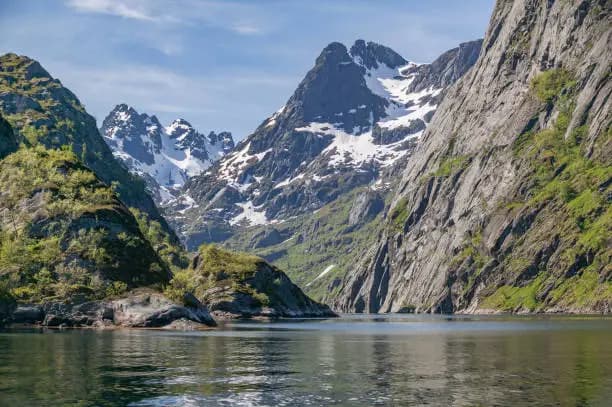
Trollfjord is a narrow and deep arm of the sea that cuts into the mountains of the Lofoten Islands, a few kilometers north of Svolvær. Its nearly vertical rock walls plunge directly into the water, creating a striking corridor approximately two kilometers long. Accessible primarily by boat, it ranks among the most spectacular passages on the Norwegian coast and is one of the highlights of the Hurtigruten coastal route.
Quick practical information
- Access: by boat from Svolvær (local excursions) or via the Hurtigruten ferry on the Bergen–Kirkenes line
- Recommended duration: crossing the fjord takes approximately 30 to 45 minutes depending on the vessel
- Entry: included in your cruise or excursion ticket; no direct land access
- What to wear: warm clothes and windproof jacket recommended, even in summer — the corridor creates a wind effect
- Accessibility: depends on the vessel; check with the operator
What you'll see
The walls of Trollfjord rise several hundred meters on each side, snow-covered for much of the year. The water, a deep blue-green, reflects the cliffs on calm days. White-tailed eagles regularly nest on the rocky ledges and are often visible from the boat deck. In winter, the Northern Lights may illuminate the corridor.
History and context
Trollfjord entered Norwegian history during the "Battle of Trollfjord" in 1890. Local fishermen using rowing boats opposed industrial steamers that attempted to monopolize fishing grounds within the fjord. This episode, a symbol of small fishermen's resistance to industrialization, was immortalized by writer Jonas Lie in his novel Trollfjord.
Highlights of the visit
Entering the fjord
Passing through the entrance is the most intense moment: the fjord is so narrow that the large Hurtigruten ships maneuver with very little margin. The walls seem to close in on the vessel, creating an impression of a unique mineral corridor.
White-tailed eagles
The near-constant presence of white-tailed eagles — Europe's largest bird of prey — is one of the major attractions. Local guides know the nesting areas and point out the birds to passengers.
Winter light
Between November and February, the low-angle light tints the cliffs pink and orange. Combined with the snow and silence, the fjord's winter atmosphere is dramatically different from summer.
Photography tips
Position yourself at the bow or stern of the boat to avoid windows and reflections. Light is softest in early morning or late afternoon. In winter, the blue hour just before sunrise offers striking cool tones. A telephoto lens is useful for photographing eagles on the ledges.
Location and access
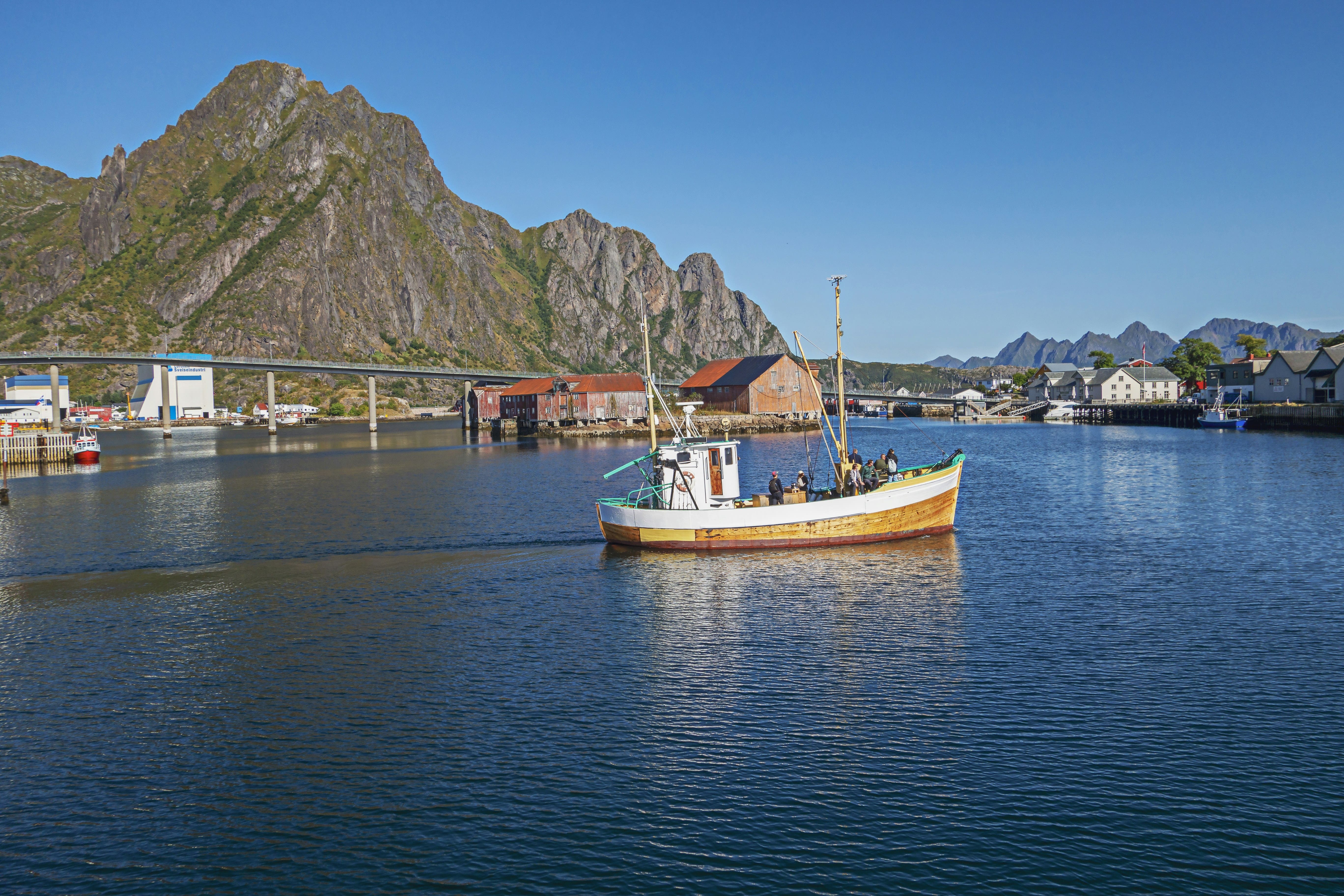
Trollfjord is located between the islands of Austvågøya and Hinnøya, approximately 15 km northeast of Svolvær. There is no road access. Boat excursions depart from Svolvær's harbor; several local operators offer dedicated fjord trips, some combined with eagle watching. The Hurtigruten ferry makes an incursion here on its journey north.
Nearby attractions
- Svolvær — capital of the Lofoten Islands, departure point for excursions and hub of the archipelago's activity.
- Svolværgeita — the two iconic rocky peaks that dominate Svolvær, accessible to experienced climbers.
- Vestfjorden — the grand fjord separating the Lofoten Islands from the mainland, crossed by ferry from Bodø.
- Digermulen — quiet hamlet on the opposite side of the fjord, departure point for less-frequented hiking trails.
Frequently asked questions
The fjord is accessible year-round. Summer (June–August) offers midnight sun and green vegetation on the heights. Winter (November–February) allows viewing of the Northern Lights and snow on the walls, though temperatures are below freezing.
Yes. Several operators based in Svolvær offer dedicated boat excursions to Trollfjord, often combined with white-tailed eagle watching. These trips are generally shorter and more flexible than the Hurtigruten cruise.
White-tailed eagles nest in the area and are observed very regularly, especially in winter when vegetation is less dense. Local guides know their usual presence zones.
Crossing the fjord itself takes approximately 30 to 45 minutes. Full excursions from Svolvær, including round-trip travel, typically last between 2 and 4 hours depending on the operator.
No photographic restrictions are imposed in the fjord. Bring a cloth to wipe spray from your lens and dress warmly if you stay on the outer deck.
Interested in this visit?
We can include it in your personalised itinerary.