Skagsanden Beach
Skagsanden Beach
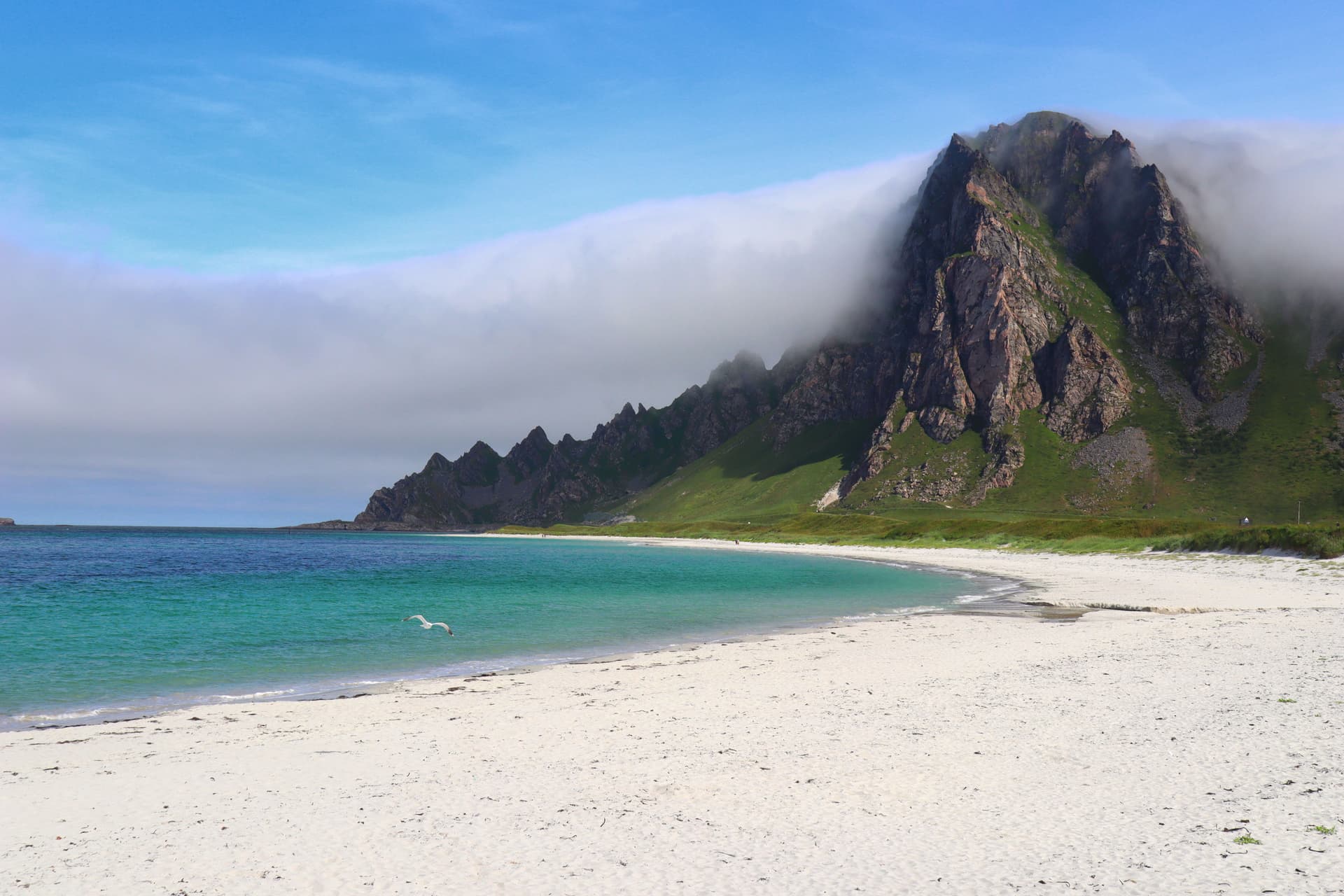
Skagsanden is a wild white sand beach on Flakstad Island in the Lofoten archipelago. Mountains rising in the background, reflections on wet sand, midnight sun in summer and auroras in winter: raw Arctic landscape.
Skagsanden is a white sand beach bordering Flakstad Island in the Lofoten archipelago. Framed by mountains that plunge almost into the sea, it is known for its ever-changing reflections under Arctic light — pearl grey beneath cloud cover, golden beneath the midnight sun. The beach remains wild and undeveloped, attracting photographers and lovers of raw Nordic landscapes in equal measure.
Practical Information at a Glance
- Access: roadside along the E10 (Lofotenvegen), parking near the beach
- Admission: free, no entry fee
- Recommended duration: 30 minutes to 1.5 hours depending on how far you wish to walk along the shore
- Clothing: frequent and strong winds — warm and waterproof clothing recommended year-round
- Swimming: water very cold even in summer; no lifeguard on duty
What to See
The sand is almost pure white, contrasting with the blue-green waters of Vestfjorden. In the background, the peaks of Flakstad form an abrupt rocky wall. In clear weather, reflections of the mountains on wet sand create natural compositions highly prized in landscape photography. In winter, the northern lights can appear directly above the beach.
History and Context
Flakstad is one of the oldest inhabited islands in the Lofoten, with traces of settlement dating back several millennia. Skagsanden Beach has no monumental history of its own, but it sits in a fisherman's territory where the sea has always dictated the rhythm of life. The village of Flakstad, with its red wooden church from the 18th century, is located in immediate proximity.
Highlights of Your Visit
White sand and reflections
The fine texture of the sand and the clarity of the water make Skagsanden one of the most photographed beaches in the Lofoten. At low tide, the wet sand reflects the sky and mountains with almost mirror-like precision.
Midnight light in summer
Between late May and mid-July, the sun does not set. The low-angled midnight light tints the sand and ridges in warm orange. This is the window most sought after by photographers who make the trip specifically for this hour.
Northern lights in winter
From late September to early April, clear nights offer favorable conditions for auroras. The absence of light pollution and the open horizon over the sea make it an effective observation point.
Photography Tips
Light is optimal early in the morning or late in the day, when mountains cast long shadows across the sand. In summer, the midnight sun provides warm, low-angled light ideal for photography. Position yourself at the level of wet sand to capture reflections. In winter, a tripod is essential for long exposures during auroras. Drones are permitted in this area, but check local restrictions in place.
Location and Access
Skagsanden is located on Flakstad Island, accessible via the E10 road that runs through the entire Lofoten archipelago. From Svolvær, allow approximately 1.5 to 2 hours of driving. The beach is visible from the road; informal parking space allows you to stop. No regular public transport serves the beach directly. Access to the sand is easy on foot from the parking area, with no significant elevation change.
Nearby
- Flakstad Church — 18th-century red wooden church, one of the oldest in the Lofoten, a few minutes' drive away.
- Nusfjord Village — a preserved and listed fishing village with its traditional rorbu cabins, about twenty minutes to the southwest.
- Ramberg Beach — another white sand beach on Flakstad, slightly busier, with a few services.
- Reine — an iconic Lofoten village on Moskenesøya Island, approximately 30 minutes to the southwest.
Frequently asked questions
Summer (June-August) offers the midnight sun and milder temperatures. Winter (October-March) is the season for northern lights and snow-covered landscapes. Spring and autumn are less crowded and offer soft light highly appreciated in photography.
Technically yes, but the water remains very cold even in mid-summer. There is no lifeguard nor any swimming infrastructure. The beach is primarily a place for walking and contemplation.
The E10 road connects Svolvær to Flakstad. The drive takes approximately 1.5 to 2 hours depending on conditions. Car rental is the most convenient way to explore the Lofoten.
The area is not part of a national park closed to drones, but Norwegian regulations impose general rules (altitude, distance from people). Check current restrictions with local authorities before flying.
Yes. Flakstad Church, Ramberg Beach, and Nusfjord village are all within 30 minutes' drive. Reine and Å further south round out a full day on the E10.
Interested in this visit?
We can include it in your personalised itinerary.