The Nærøyfjord
The Nærøyfjord
A narrow arm of the Sognefjord and UNESCO World Heritage site, the Nærøyfjord is best explored by cruise from Gudvangen, between 1,700-meter cliffs and isolated hamlets.
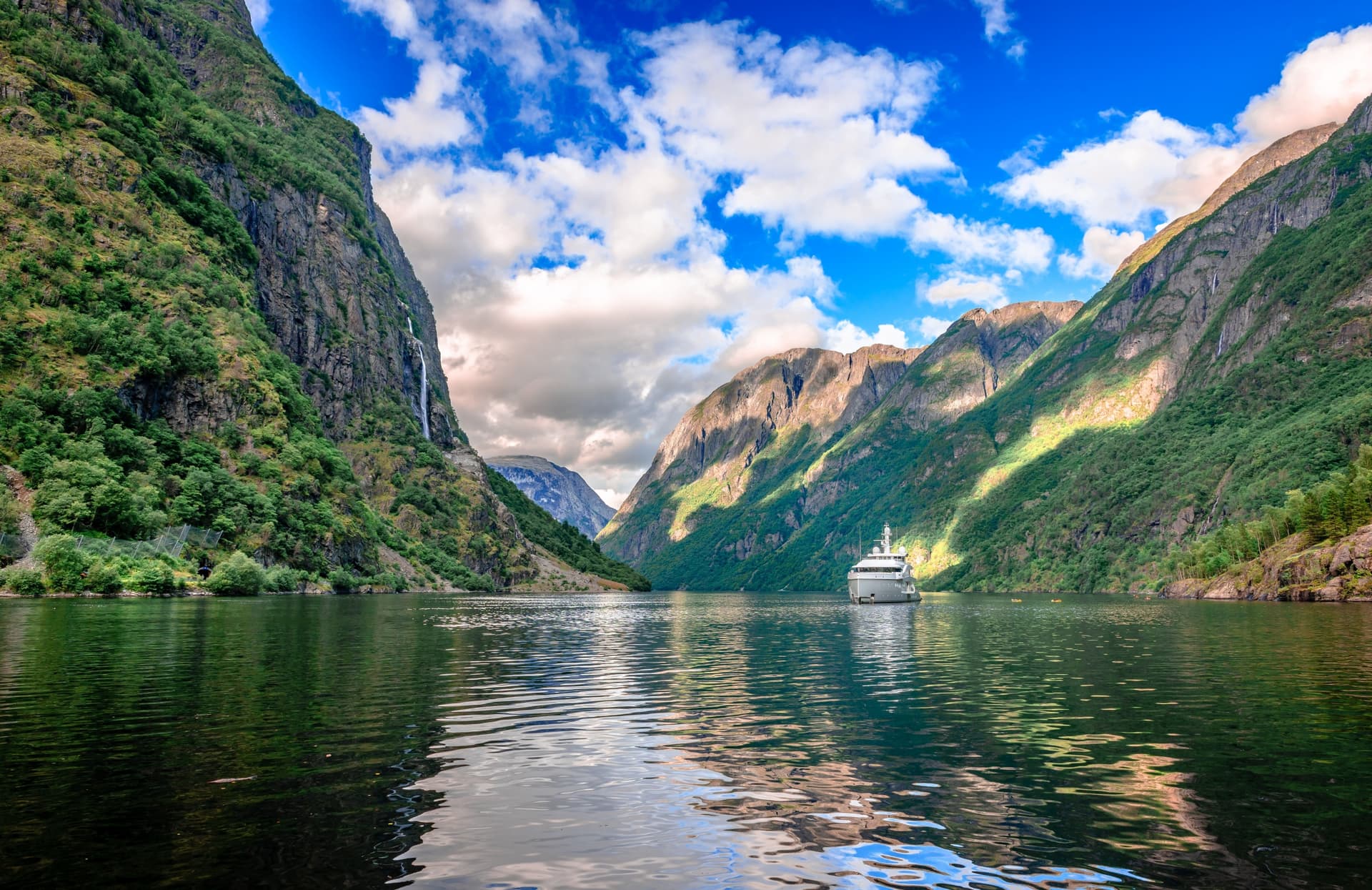
The Nærøyfjord is a narrow arm of the Sognefjord, located in western Norvège, approximately 150 km northeast of Bergen. Inscribed as a UNESCO World Heritage site since 2005, it stretches for 17 km and narrows to just 250 meters at its most constricted point, framed by cliffs rising over 1,700 meters high. The village of Gudvangen, at its southern tip, serves as the main access point for cruises and hiking expeditions.
Why visit the Nærøyfjord
The Nærøyfjord is regarded as one of Europe's narrowest and most spectacular fjords. Its constricted silhouette, waterfalls cascading down the rock faces, and isolated hamlets have made it a quintessential symbol of Norwegian landscapes. The fjord notably inspired the fictional city of Arendelle in Disney's Frozen, which heightened its international profile.
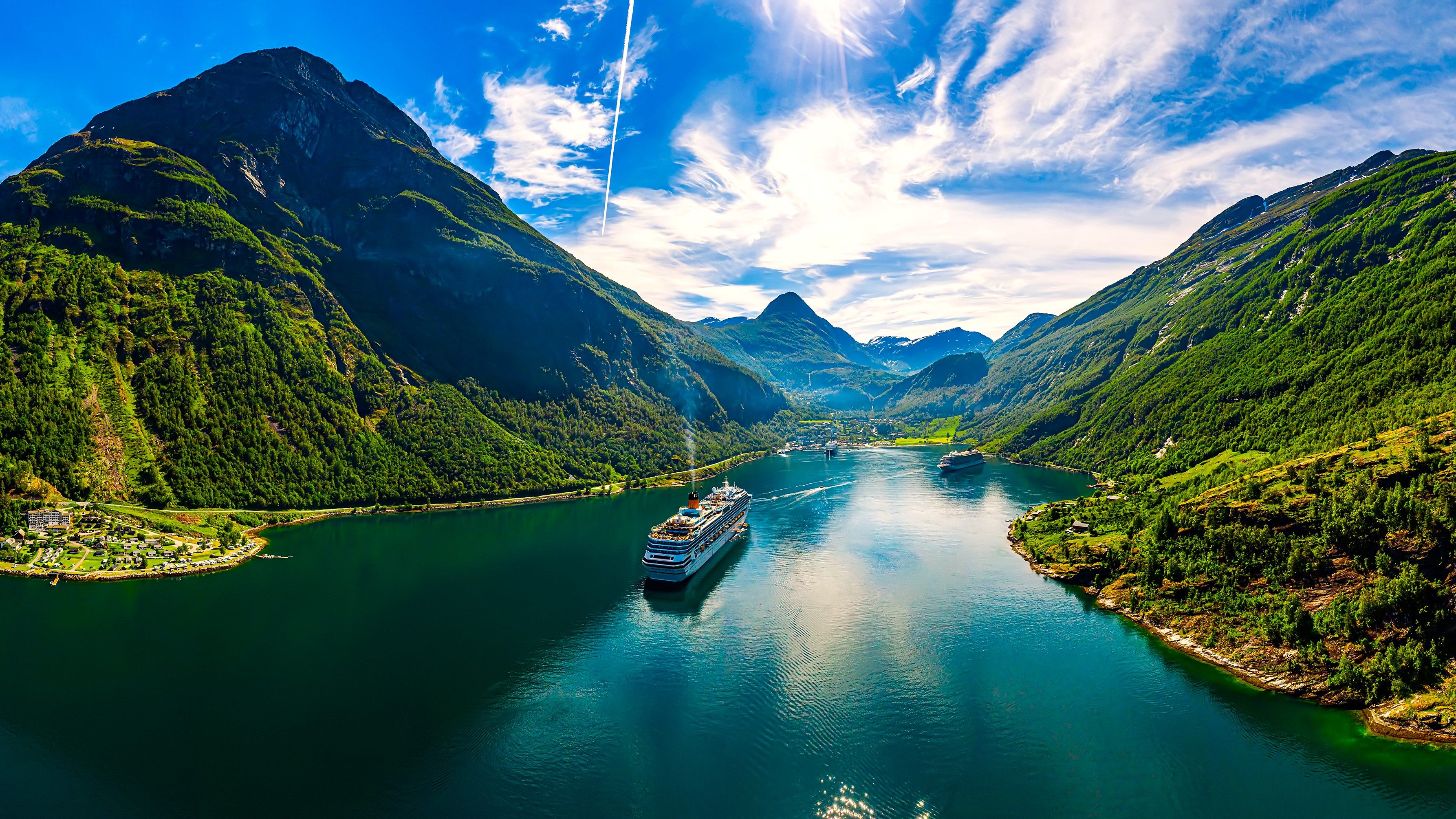
Unlike the more touristy Geirangerfjord, the Nærøyfjord retains a more intimate atmosphere, with a few isolated farms still operating on its shores.
History and UNESCO inscription
The Nærøyfjord is the result of successive glaciations that carved into the rock over the past two million years. As the glaciers retreated, seawater rushed into the glacial valley, forming the fjord we see today.
In 2005, UNESCO inscribed the Nærøyfjord and Geirangerfjord together on the World Heritage list under the designation "Fjords of the Western Norvège." The designation recognizes both the geological value of these formations and the pristine quality of their landscapes.
The fjord's shores were inhabited from the Viking era onward. Communities here lived from fishing, mountain livestock herding, and maritime trade, under conditions made difficult by isolation and steep slopes.
What to see and do
Cruising the fjord
The boat journey between Gudvangen and Flåm remains the most common way to discover the Nærøyfjord. Passage through the fjord's narrowest section, where the rock walls seem to close in on the boat, is the highlight of the experience. Plan for approximately 2 hours of navigation aboard modern vessels equipped with observation decks.
The village of Bakka
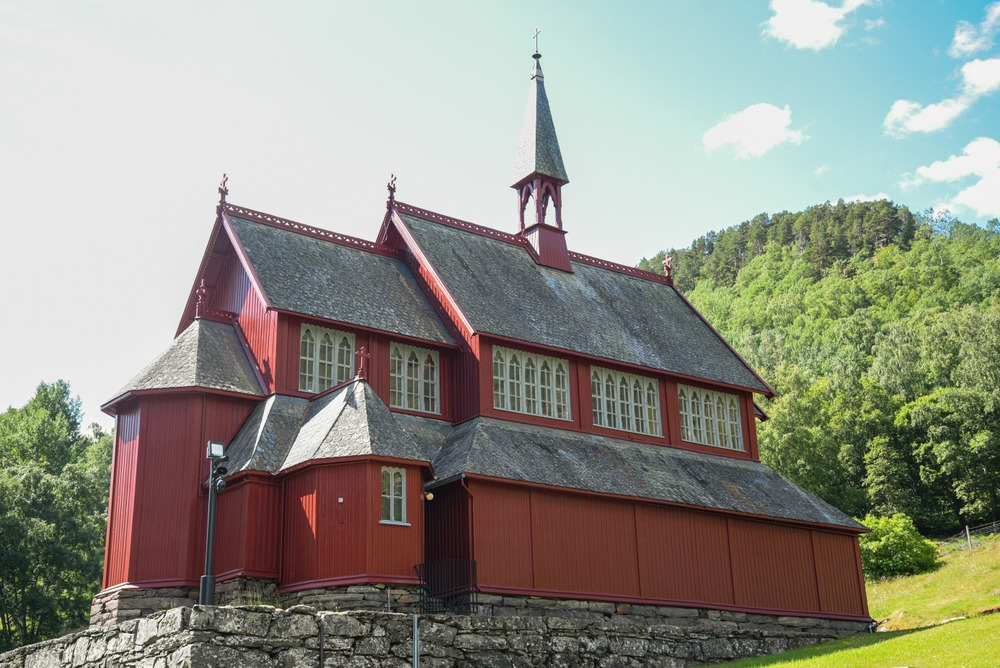
On the fjord's west bank, this hamlet of a handful of houses is home to a small white wooden church dating from the 19th century. It is one of the few villages still visible from the water, accessible by road or hiking trail.
The Viking village of Njardarheimr
Located at Gudvangen, this site recreates the daily life of a Viking community as it existed roughly 1,000 years ago. Dwellings, artisan workshops, and demonstrations of traditional activities offer a tangible glimpse into this period.
Hiking and kayaking
Several trails depart from Gudvangen and climb to higher elevations, offering panoramic views of the fjord. Kayaking, guided by local operators, allows you to approach waterfalls and explore the shoreline from water level.
When to visit
The most favorable period runs from May to September. Cruises operate at full capacity, hiking trails are accessible, and temperatures remain comfortable, typically between 10 and 20°C depending on the day.
Autumn (September–October) offers striking colors on the mountainsides and lighter crowds. Winter transforms the landscape: cruises become less frequent, but clear skies offer genuine chances to see the Northern Lights. Spring coincides with snowmelt and waterfalls at full flow.
How to get there
From Bergen: plan for approximately 3 hours by car to Gudvangen via the E16. This is the most flexible option for those wishing to extend the itinerary to other fjords.
By train and boat: the combination of Bergen-Voss train service followed by a bus to Gudvangen is regular. From Gudvangen, the boat reaches Flåm, where the renowned Flåmsbana descends toward Myrdal to rejoin the main railway line.
From Oslo: allow a full day by car, or use the Bergen-Oslo railway line, which serves Myrdal and Voss.
Practical information
- Main cruises depart from Gudvangen or Flåm. Advance booking is recommended during peak season.
- Pack windproof clothing and a fleece jacket, even in summer: temperatures drop quickly on the water.
- Mobile coverage can be weak in the fjord's narrowest sections.
- Accommodations are concentrated in Gudvangen, Flåm, and Aurland; very few options exist on the Nærøyfjord's shores themselves.
What to combine nearby
The Nærøyfjord is typically visited as part of a broader fjord itinerary. Flåm, at the end of the cruise, provides access to the scenic Flåmsbana railway. Aurland, a few kilometers away, is home to the Stegastein viewpoint, suspended 650 meters above the Aurlandsfjord. Further north, the Sognefjord, of which the Nærøyfjord is an arm, extends for nearly 200 km.
To compare with other UNESCO-listed formations, the Geirangerfjord is the natural counterpart to the Nærøyfjord. For architectural landmarks, the Hardanger Bridge merits a detour. In Bergen, the logical starting point for this region, the fish market remains a classic stop.
Frequently asked questions
Frequently asked questions
Plan your trip
The Nærøyfjord fits naturally into a circuit of western fjords, spanning Bergen, Flåm, and the Sognefjord. To build a custom itinerary that includes this stop, consult our Norvège travel experiences.
Interested in this visit?
We can include it in your personalised itinerary.