Trøndelag and Central Coast
Between the Nidaros Cathedral in Trondheim, the ochre houses of Røros at 2,070 feet and the musk oxen of Dovrefjell, Trøndelag marks Norway's transition from the agricultural south to the subarctic north.
Trøndelag stretches across the Trondheim Fjord for nearly 125 miles, between the high plateaus of Dovrefjell to the south and the fragmented coasts of Namdalen to the north. It is a pivotal region: here, Norway shifts from the agricultural south toward the subarctic north, and latitude (63°N at Trondheim) begins to impose its constraints—extraordinarily long days in June, weak light by 2 p.m. in December. Our team regularly programs it as a structuring stopover between Oslo and the Lofoten Islands, yet it deserves to be considered on its own merits.
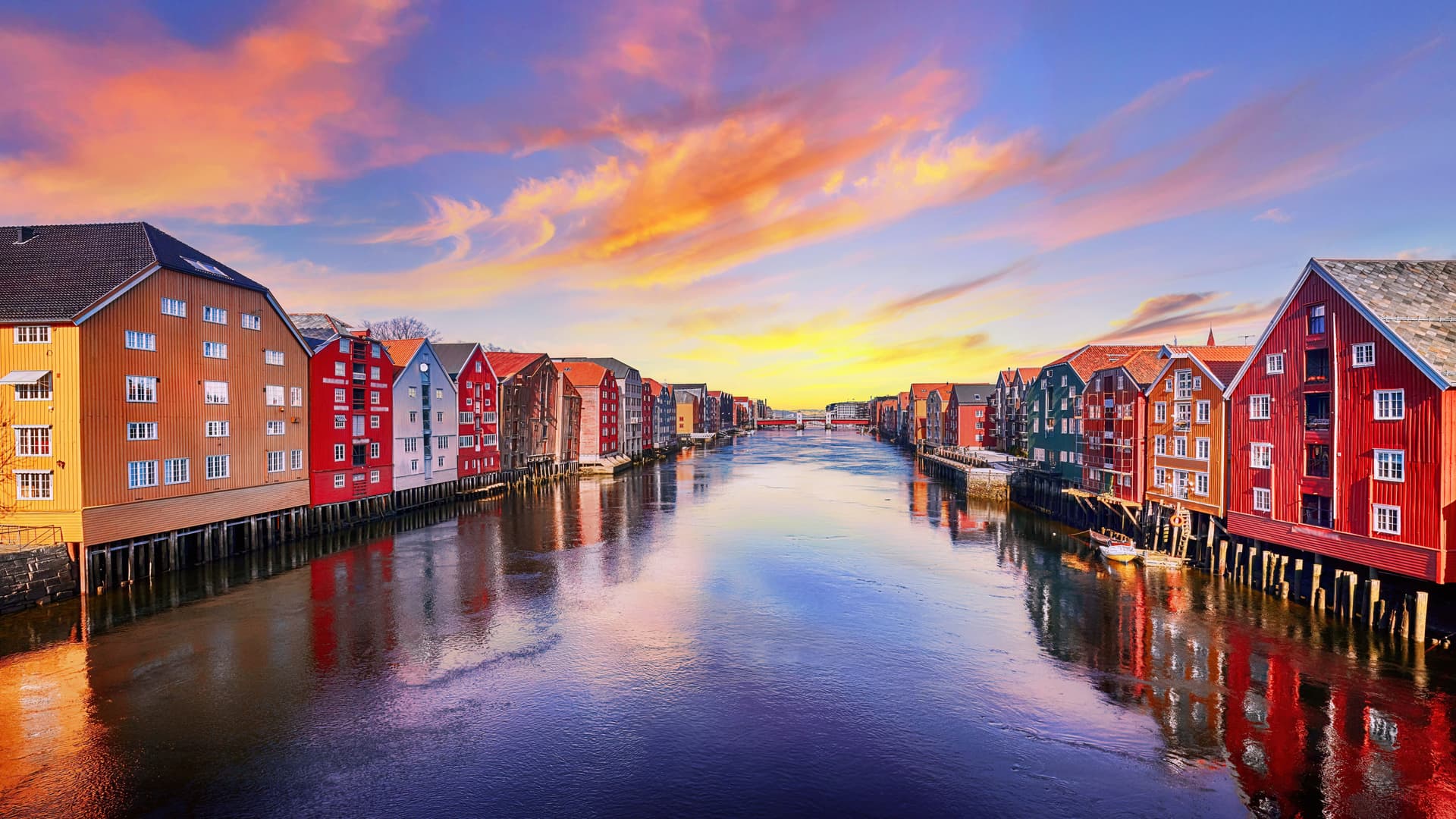
Trondheim, the country's third-largest city with 215,000 inhabitants, served as the kingdom's capital until the 13th century. Nidaros Cathedral, begun in 1070 over the tomb of Saint Olav, remains the coronation site of Norwegian sovereigns and the terminus of the Saint Olav Pilgrimage, a 400-mile marked trail from Oslo. The Bakklandet quarter, on the east bank of the Nidelva, lines its painted wooden houses and former timber warehouses on stilts, now converted into cafés and workshops. The city can be explored on foot or by bicycle in a day and a half.
Some 100 miles to the southeast lies Røros, a place apart. This mining town, UNESCO-listed since 1980, thrived for three centuries on copper extraction, which ceased in 1977. The streets preserve their original grid, wooden facades painted ochre and darkened by time, and mining heaps still dominate the town. At 2,070 feet on a barren plateau, Røros regularly records January winters of -13°F and remains one of continental Europe's coldest inhabited settlements. The February market, Rørosmartnan, has perpetuated a commercial fair since 1854, drawing producers and artisans for five days.
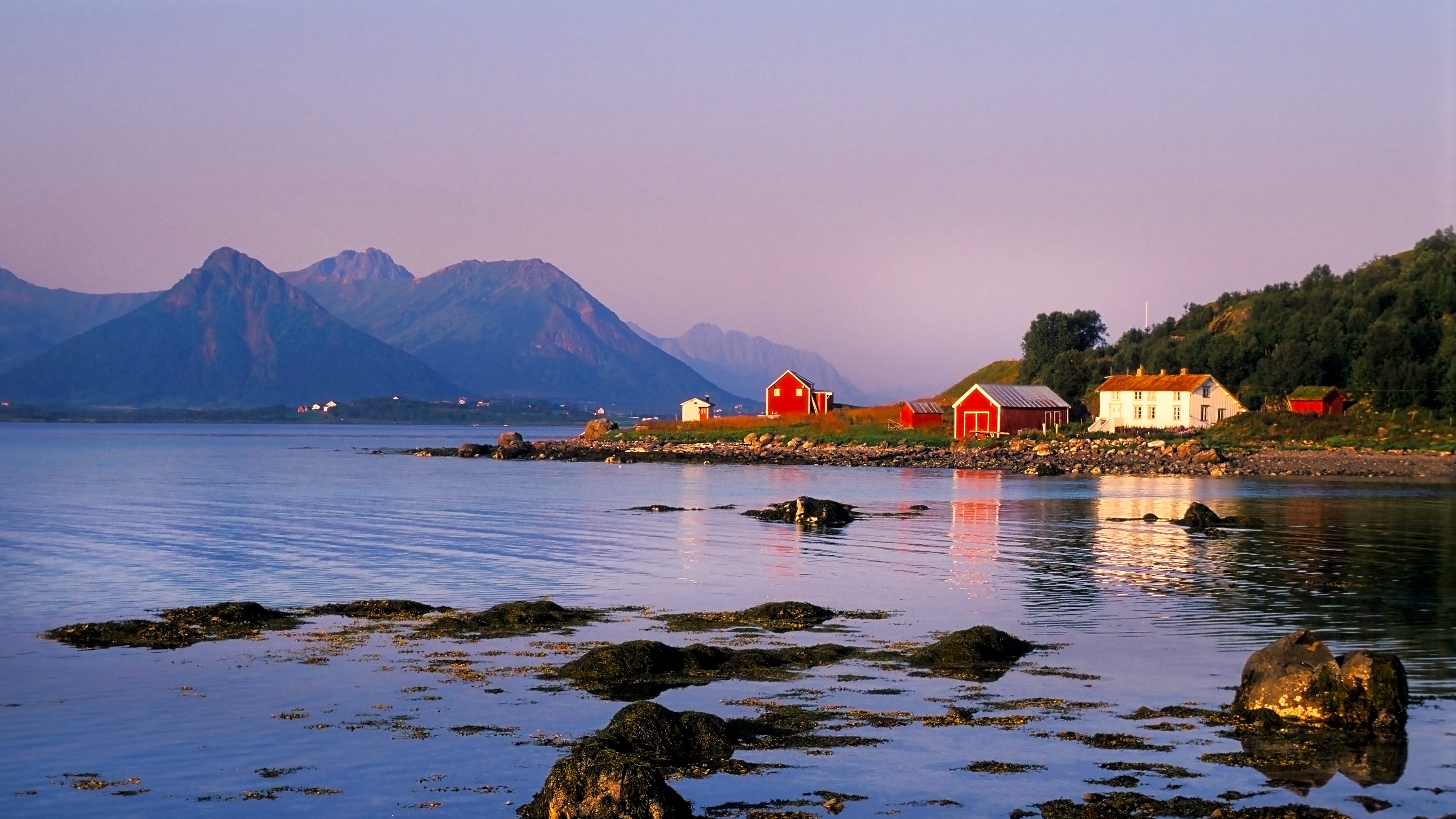
To the west, Trøndelag's coast is carved into thousands of islets. Hitra and Frøya, linked to the mainland by submarine tunnels, live from fishing and salmon farming, Norway's first export product after oil. Here you eat king crab caught locally, rope mussels, and bacalao revisited with tomato sauce—a legacy of commercial ties with Portugal. Farm inns (gårdsmat) offer simple nights by the sea, with an economy of fishmongers and herders still evident. Further north, the Vega archipelago, UNESCO-listed for its eider-down harvesting tradition, marks the transition toward Nordland.
Dovrefjell-Sunndalsfjella National Park, at the region's southern edge, shelters continental Europe's only musk oxen population, reintroduced from Greenland in the 1930s. A guided hiking safari of 5 to 7 hours departing from Oppdal or Hjerkinn allows approach within 330-650 feet, binoculars essential. The plateau rises above 6,500 feet and retains rare alpine fauna: wolverines, arctic foxes, golden eagles. It's also the only place in the country where you can easily combine train travel (the Dovrebanen Oslo-Trondheim line) with high-altitude hiking.
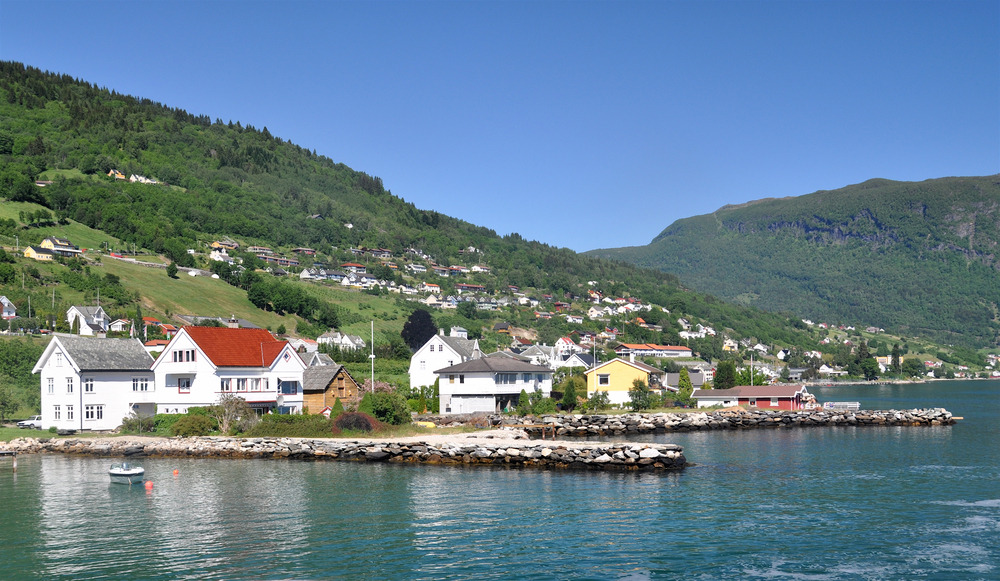
Trøndelag is also an agricultural region, long the grain store of the north. The Stiklestad landscapes, where Saint Olav died in 1030, and the Gauldal and Verdal valleys present a succession of red farms, wooden barns, and pastures bordered by birch forests. This is the Norway that surprises travelers seeking only fjords—rural, inhabited, deeply human.
Must-See Highlights
Nidaros Cathedral, Trondheim. Gothic edifice built over the tomb of Saint Olav, coronation site of Norwegian kings since 1163. West façade sculpted with 86 statues, accessible with tower climb.
Musk Oxen Safari at Dovrefjell. Guided walk of 5 to 7 hours departing from Hjerkinn to approach one of the 250 individuals in the herd. Available June through September, early morning departures recommended.
Røros, Mining Town at 2,070 feet. Ochre wooden houses arrayed around copper mining heaps, UNESCO-listed. Winters at -13°F in January, a particular light quality that justifies the detour even in cold weather.
Hitra and Frøya Coast. Islands linked by submarine tunnels, economy centered on salmon and king crab. Nights in farm inns facing the sea, kayaking among islets June through August.
Bakklandet and Trondheim Quays. Former wooden warehouses on stilts along the Nidelva, now converted to cafés and workshops. District walkable in two hours, perfect for an evening stroll.
When to Visit
The best window extends from late May through mid-September. In June and July, temperatures in Trondheim range from 54 to 68°F, daylight never truly fades (permanent daylight in late June), and Dovrefjell trails are snow-free. August brings cooler nights and the season's first bilberries in the forests. September offers autumn color on Stiklestad birches and remains viable for hiking through mid-month, with daytime temperatures of 41 to 50°F.
Winter presents two faces depending on altitude. On the coast, Trondheim remains relatively mild (28 to 36°F in January) with high humidity and 4 to 5 hours of daylight. At Røros and on the Dovrefjell plateau, temperatures regularly drop to -4°F, even -22°F during cold snaps, but the air is dry and snow stable. We advise against October-November and April: alternating rain and sleet, muddy trails, partial closures at rural accommodations.
Practical Advice
We recommend 3 to 5 days on site. Two days for Trondheim and its cathedral, one day for Røros (3 hours by road or train from Trondheim, overnight stay advised), one to two days for Dovrefjell or the Hitra coast. Trondheim-Værnes Airport hosts direct flights from Oslo (50 minutes) and several European capitals in summer. The Dovrebanen railway line connects Oslo to Trondheim in 6.5 hours through Dovrefjell: we often use it as an alternative to flying—slower but panoramic.
Trøndelag naturally articulates with two other stopovers. To the south, it extends a stay in Oslo and Østlandet via the Dovrebanen train. To the north, it serves as a springboard toward the Lofoten and Vesterålen Islands, either by domestic flight (1 hour to Bodø then ferry) or by coastal road in 2 to 3 days via the Kystriksveien and Vega archipelago. Comfort levels are high: urban hotels in Trondheim, farm inns on the coast, high-altitude lodges at Dovrefjell. The region suits contemplative travelers, families with children from age 8 onward (musk oxen safari accessible), and rural heritage enthusiasts more than those seeking spectacular fjords—reserve those for the West.