Lofoten and Vesterålen
Two Arctic archipelagos where granite peaks plunge into the sea, dotted with cod-fishing villages, white-sand beaches and sperm whales off the coast of Andenes.
Lofoten and Vesterålen form two archipelagos connected by bridges and tunnels, stretching nearly 200 kilometers off the coast of northern Norvège, between the 68th and 69th parallels. Seen from the Bodø ferry or the E10 road that cuts through them end to end, their granite and gabbro peaks rise almost without transition from the sea, between 800 and 1,200 meters. This verticality stems from their age: they rank among the oldest rocks on the planet, polished by Quaternary glaciers. There is virtually no piedmont, which explains the striking visual effect of these islands where you pass in just a few meters from white-sand beach to granite wall.
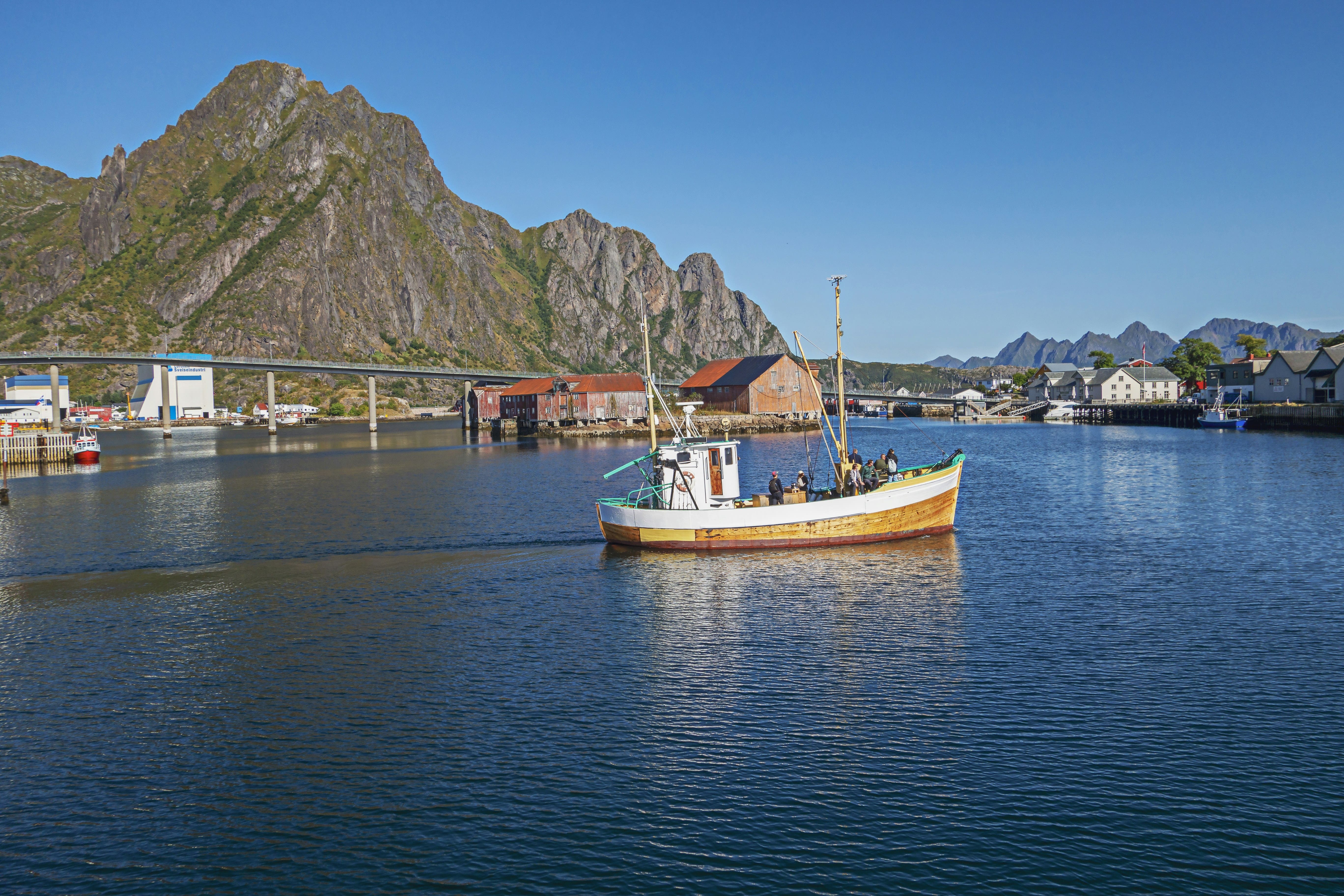
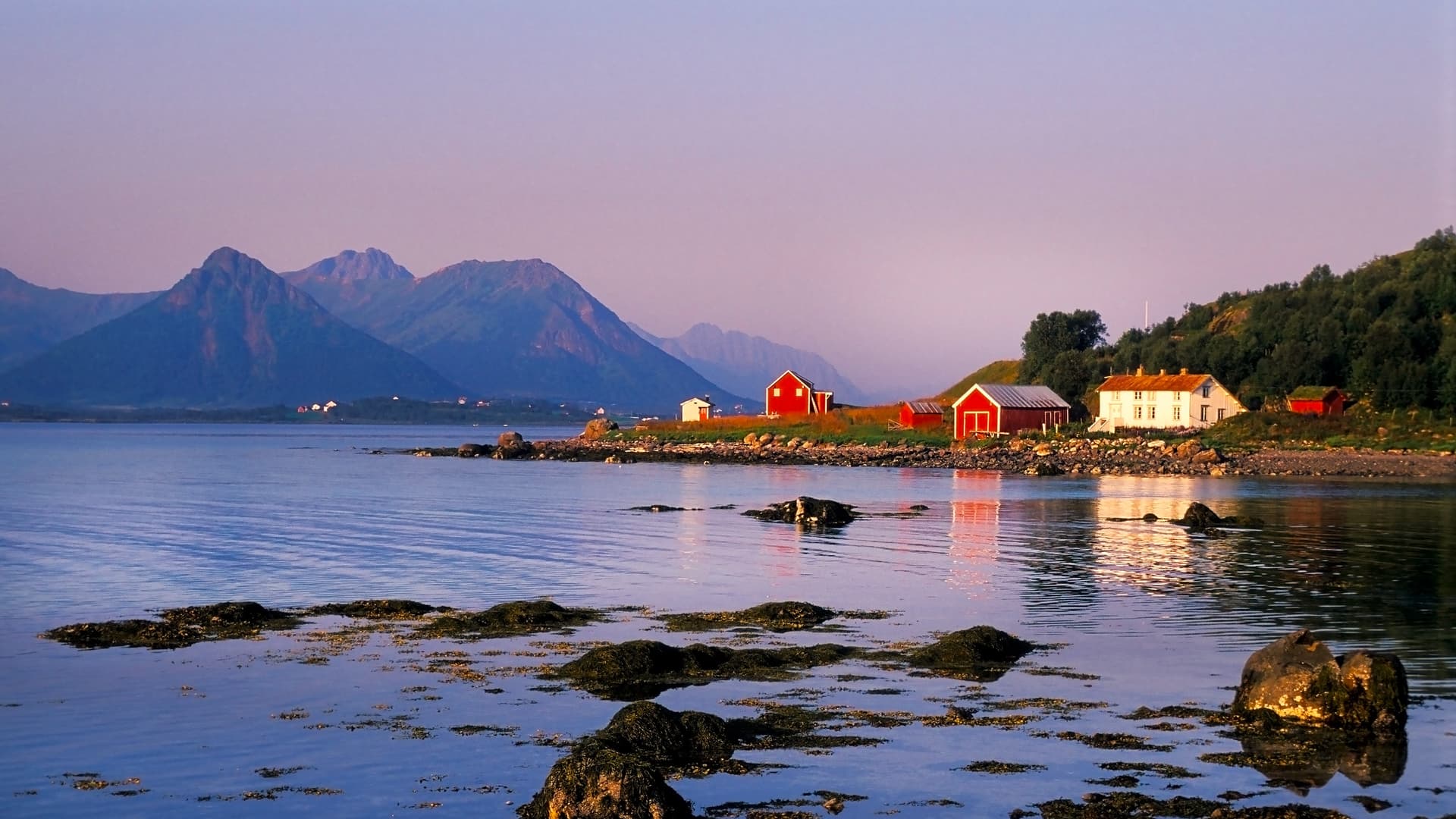
Life here revolves around Arctic cod, skrei, which comes to spawn along the coasts from January to April. The villages of Reine, Henningsvær, Nusfjord and Å, at the southern tip of Moskenesøya, have lived since the Middle Ages from this fishery and the production of tørrfisk, air-dried cod hung on triangular wooden racks called hjell. It has been an export product since the 12th century, primarily to Italy and Portugal, and the scent permeates the hamlets throughout the drying season. The Å fishing museum and the Lofotmuseum in Kabelvåg document this economy that still shapes the built landscape: the rorbu, these red cabins on stilts that housed seasonal fishermen, are today mostly converted into accommodations.
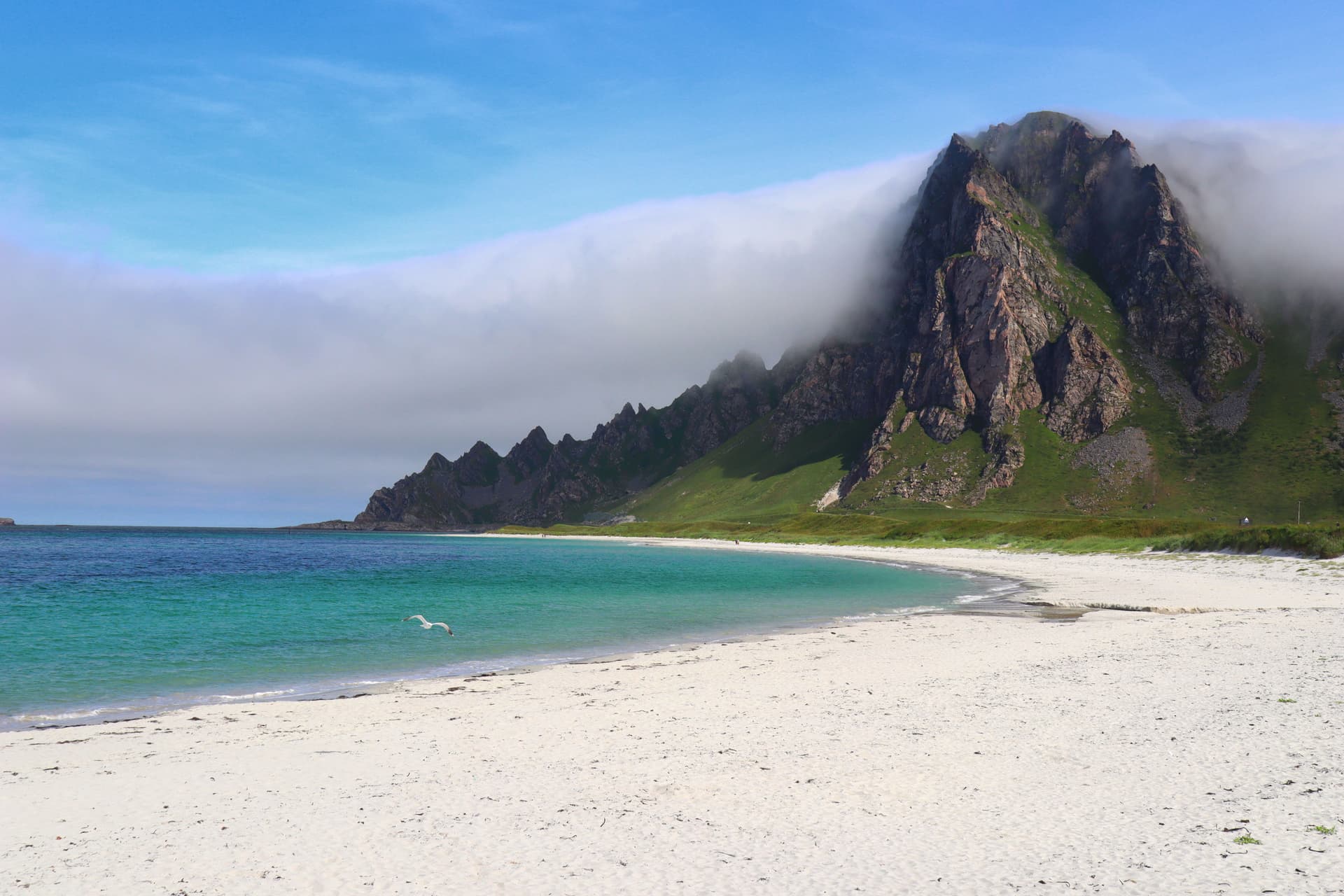
On the ground, the contrasts are striking. The beaches of Haukland, Uttakleiv, Kvalvika and Bunes display pale sand that would evoke the tropics without the water temperature, around 6 to 12°C depending on the season. The hiking trails climb steeply: the Reinebringen (448 m), equipped with a stone staircase built by Nepali Sherpas, overlooks Reine Bay in one and a half hours of ascent. The Ryten, above Kvalvika, or the Måtinden in the Vesterålen offer comparable challenges. For experienced hikers, the crossing of Hermannsdalstinden (1,029 m) takes a full day.
The Vesterålen, to the north, are wider, less steep, and far less crowded. This is our recommended base for cetacean watching: Andenes, at the northern tip of Andøya, provides access to the continental shelf where sperm whales feed year-round, and where you encounter orcas and humpback whales from November to January when herring enter the fjords. The village of Nyksund, long abandoned then repopulated, and the island of Bleik with its 2.5-kilometer beach, give a sense of the more rural character of this second archipelago.
The climate surprises with its mildness. Thanks to the North Atlantic Drift, winter temperatures hover around -2 to +2°C at sea level, some 15°C warmer than latitude would suggest. In exchange, wind and humidity dominate, and weather changes rapidly: it's not uncommon to experience sunshine, a snow squall and a rainbow within the same hour. Polar night lasts roughly from December 7 to January 5, the most favorable period for the Northern Lights, alongside February and March. Conversely, the midnight sun illuminates the archipelago without interruption from May 26 to July 17.
Culturally, Lofoten preserves a distinct Norwegian coastal identity separate from the Sami Norvège of Finnmark: fishing, merchant marine, and more recently contemporary art, with the North Norwegian Art Centre in Svolvær and Vikten's blown-glass gallery. Henningsvær, perched on two islets connected by bridges, houses several galleries and an iconic football pitch, set on a rock surrounded by sea.
Must-see
Climbing the Reinebringen. 1,978 stone steps built by Nepali craftsmen lead to 448 meters above the village of Reine, with a plunging view over the U-shaped bay and its islets. Allow 1.5 hours round trip; start early in the morning to avoid summer crowds.
A night in a rorbu at Hamnøy or Nusfjord. Sleep in a red fisherman's cabin on stilts, heated by a wood stove, with the tide lapping beneath the floorboards. Nusfjord, protected since 1975, preserves some thirty original buildings around a dead-end harbor.
Sperm whales off Andenes. A 3 to 4-hour boat trip from the northern tip of Andøya, out to the continental shelf that plunges to over 1,000 meters. Male sperm whales remain here year-round, located by hydrophone before surfacing to breathe.
Haukland and Kvalvika beaches. Pale sand, turquoise water and Arctic temperatures. Kvalvika rewards a 45-minute hike across a grassy pass, and Haukland extends into the Mannen trail for a 360° view over Vestvågøy.
Henningsvær and its football pitch. The village stretches across two islets connected by narrow bridges, with art galleries, a local brewery (Lofoten Bryggeri) and the famous stadium perched on rock between two arms of sea.
When to go
Two seasons stand out. From late May to mid-July, the midnight sun allows hiking at 11 p.m., temperatures range between 10 and 18°C during the day, and all roads are passable. This is high season, with crowds concentrated at Reine, Hamnøy and on the Reinebringen: we recommend booking rorbu six to nine months in advance for July. From late September to mid-March, the archipelago shifts into luminous winter: temperatures around -2 to +3°C, very short days or total polar night between December 7 and January 5, and frequent Northern Lights under clear skies. February and March combine lengthening days, snow on the peaks and the arrival of skrei in the ports.
Months to avoid if possible are April (transition period, snowmelt on trails, many seasonal closures) and late October to mid-November (autumn storms, winds of 80 to 100 km/h, ferries sometimes cancelled). Rain remains possible year-round: expect 1,000 to 1,200 mm annually, spread over roughly 200 days. Always pack windproof and waterproof clothing, even in summer.
Practical advice
We recommend 5 to 7 days on site for a thorough discovery: three days in central and southern Lofoten (Svolvær, Henningsvær, Reine, Å) and two to three days in Vesterålen (Andenes, Nyksund, Bleik), with travel times of 1 to 3 hours between bases. The Å–Andenes distance by road is 280 kilometers and requires a full day with stops. The most practical entry point is Bodø airport, followed by a 3.25-hour ferry to Moskenes, or small regional airports at Leknes, Svolvær and Andenes served from Oslo via Bodø or Tromsø.
The archipelago combines logically with Tromsø and Finnmark to the north (2 hours direct flight Tromsø–Leknes, or scenic route via E6 and E10 over two days), and more rarely with the western fjords which require a lengthy drive north. Comfort ranges from rustic but heated rorbu to boutique hotels in Svolvær, without grand luxury in the international sense: you come here for the setting, not five-star service. The region suits hikers, photographers, contemplatives who accept changeable weather, and families with children from ages 8–10 upward for short walks and whale trips. For travelers seeking urban hotels and nightlife, this is not the right destination.