Andenes
Andenes
At the northern edge of Andøya island, Andenes combines year-round reliable whale watching, a 19th-century lighthouse and virtually deserted Arctic beaches, far from the crowds of the Lofoten Islands.
Andenes is a fishing village perched at the northern tip of Andøya island in the Vesterålen archipelago. Far from the well-trodden Lofoten circuit, it draws visitors for one compelling reason: it's one of the world's finest destinations for observing whales in open waters, year-round. The white lighthouse dominating the harbor, golden-sand beaches and Arctic light make it an unexpected anchor point in northern Norway.
Quick Reference
- Access: Route E10 then Fv82 from Sortland; local airport (Andøya Airport) with flights from Bodø and Tromsø.
- Recommended duration: 1 to 2 days to combine whale watching, lighthouse and beaches.
- Whale watching season: excursions available year-round; sperm whales present mainly May to September, orcas more frequent in winter.
- What to wear: warm and waterproof clothing essential at sea, whatever the season.
What You'll See
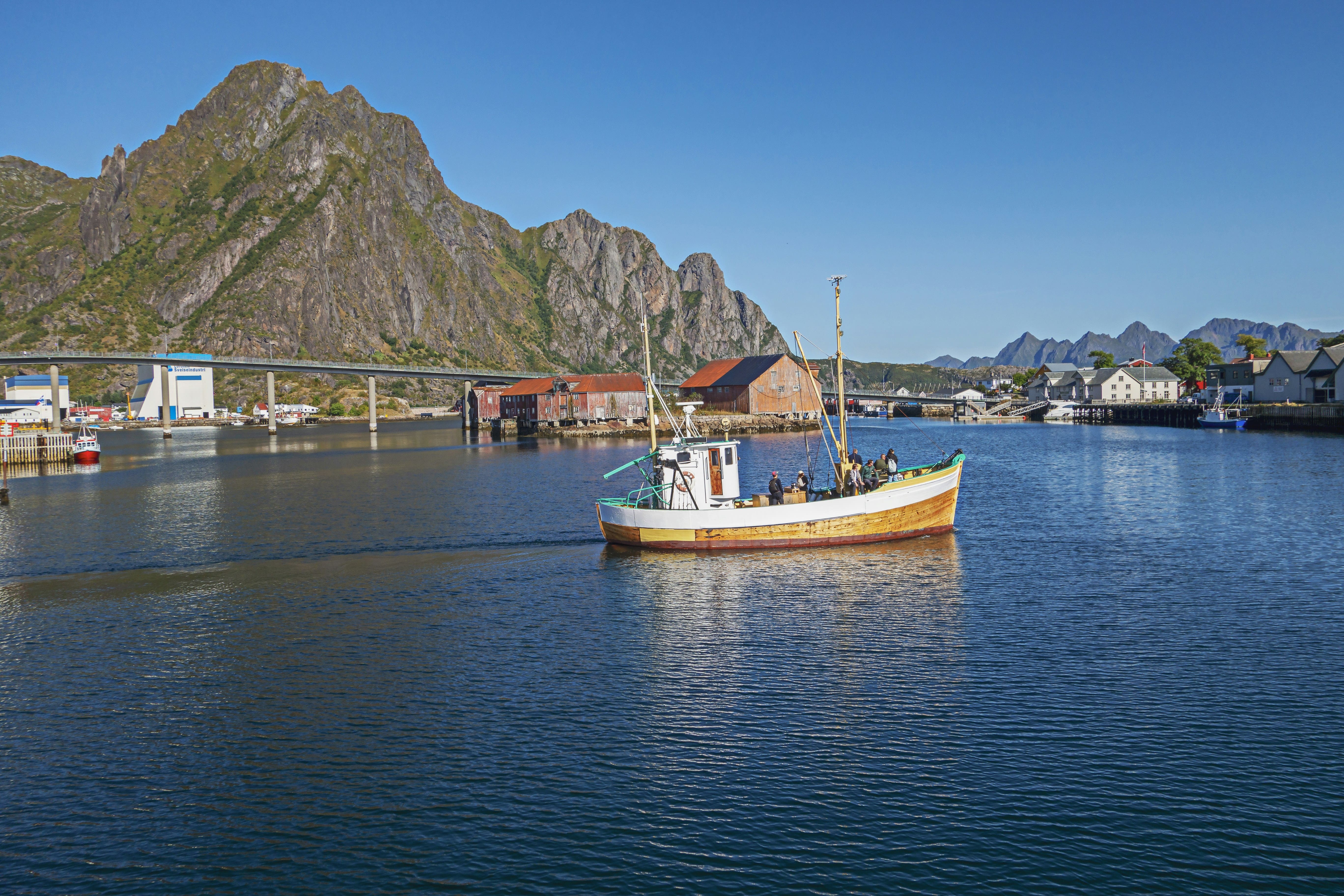
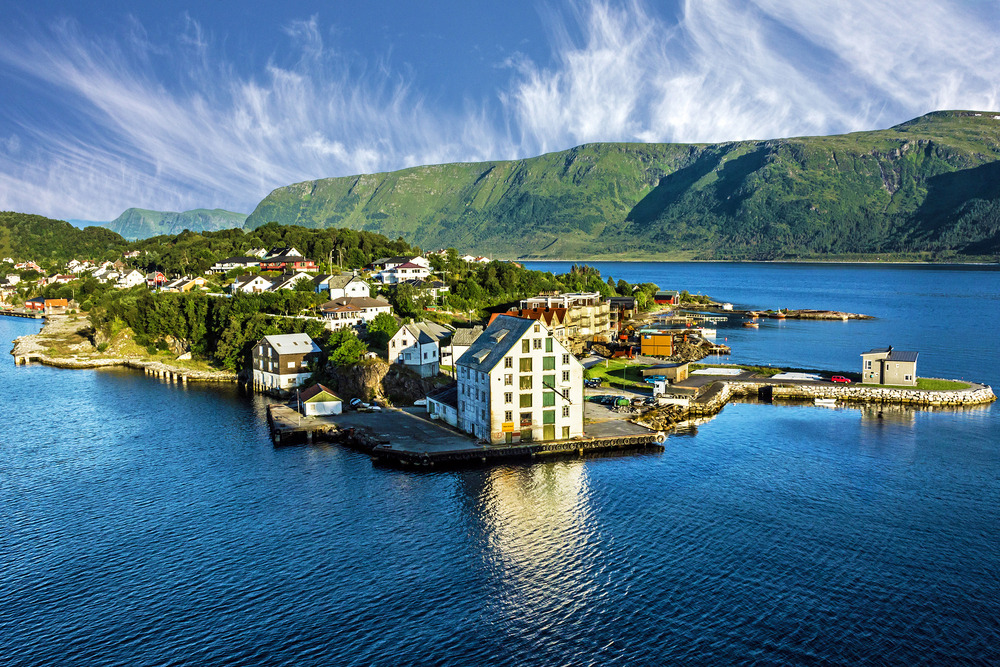
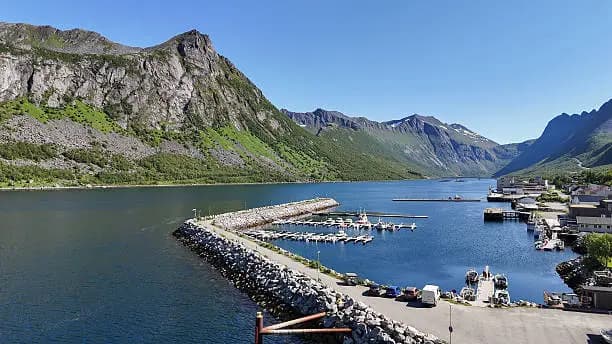
Andenes harbor concentrates most activity. Whale-watching boats depart toward the submarine canyon of Andfjorden, where deep waters attract sperm whales, orcas and dolphins. On land, the Andenes lighthouse—one of Norway's tallest—commands an unobstructed view over the Norwegian Sea. White-sand beaches north of the island, virtually deserted, offer a striking contrast to the usual Arctic image.
History and Context
Andenes owes its development to cod fishing, the defining activity of the Vesterålen since the Middle Ages. The lighthouse, built in the 19th century, guided ships through these notoriously treacherous waters. The Andøya military base, still active, recalls the region's strategic importance during the Cold War. Since the 1990s, whale watching has gradually replaced fishing as the local economic driver.
Highlights of Your Visit
Whale Watching in Open Waters
The submarine canyon off Andenes descends several hundred meters just kilometers from shore. This configuration draws sperm whales to the surface to breathe, making sightings reliable. Local operators carry marine biologists aboard, lending a scientific dimension to the excursion.
The Andenes Lighthouse
Built in 1859, this white-brick lighthouse is among Norway's tallest. It opens to visitors during summer season. From the top, views sweep across the archipelago, beaches and, on clear days, the Lofoten Islands to the south.
Andøya's Beaches
The island's west coast features stretches of fine sand—unusual for this latitude. Bleik, a few kilometers south of Andenes, is the most celebrated: a long sandy expanse facing an isolated rock, Bleiksøya, a summer puffin colony.
Arctic Nights and Northern Lights
In winter, Andenes benefits from minimal light pollution. The Northern Lights are visible September through March on clear nights. In summer, midnight sun illuminates the landscape without interruption for several weeks.
Photography Tips
At sea, use a fast shutter speed to freeze whales at the surface. The lighthouse photographs best in late afternoon, when raking light sharpens contrast with the sky. For aurora hunting, position yourself on beaches north of the village, away from the harbor's scattered lights.
Location and Access
Andenes sits at the northern tip of Andøya island in the Vesterålen. The road from Sortland (approximately 100 km) winds through peatland and mountain scenery. Andøya Airport provides regional connections. From the Lofoten Islands, allow several hours by road or ferry via Sortland. Accessibility for persons with reduced mobility is limited on whale-watching boats; inquire with operators.
In the Surroundings
- Bleik — fishing village a few kilometers south, with its beach and puffin colony on Bleiksøya.
- Vesterålen — archipelago less crowded than the Lofoten, ideal for hiking and wildlife observation.
- Lofoten Islands — accessible to the south, iconic fjord landscapes and fishing villages.
- Tromsø — Norway's Arctic capital, frequent departure point for exploring the region.
Frequently asked questions
Sperm whales are present mainly May through September. Orcas favor the waters more in autumn and winter. Excursions depart year-round, but winter weather conditions can be challenging.
Yes. The village's minimal light pollution and high latitude make it an excellent viewing point September through March on clear, moonless nights.
The route passes through Sortland and takes several hours. Seasonal ferry services also connect Svolvær (Lofoten) and Melbu, then road to Andenes. Check ferry schedules based on season.
The lighthouse typically opens for visits during summer season. Outside this period, interior access may be closed; the exterior remains freely visible.
Sea excursions can be lengthy and swells sometimes heavy. Children in good health and accustomed to the sea generally enjoy the experience. Pack warm, waterproof clothing for everyone.
Yes, both archipelagos complement each other well. Plan at least a week to explore both areas without rushing. Andenes integrates nicely at the beginning or end of a northern Norway itinerary.
Want to discover this destination?
Our local advisors design your tailor-made trip.