Lofoten Islands
Lofoten Islands
An Arctic archipelago off Norway's rocky peaks plunging into the sea, the Lofoten Islands combine centuries-old fishing villages, winter aurora displays and summer midnight sun against landscapes of rare intensity.
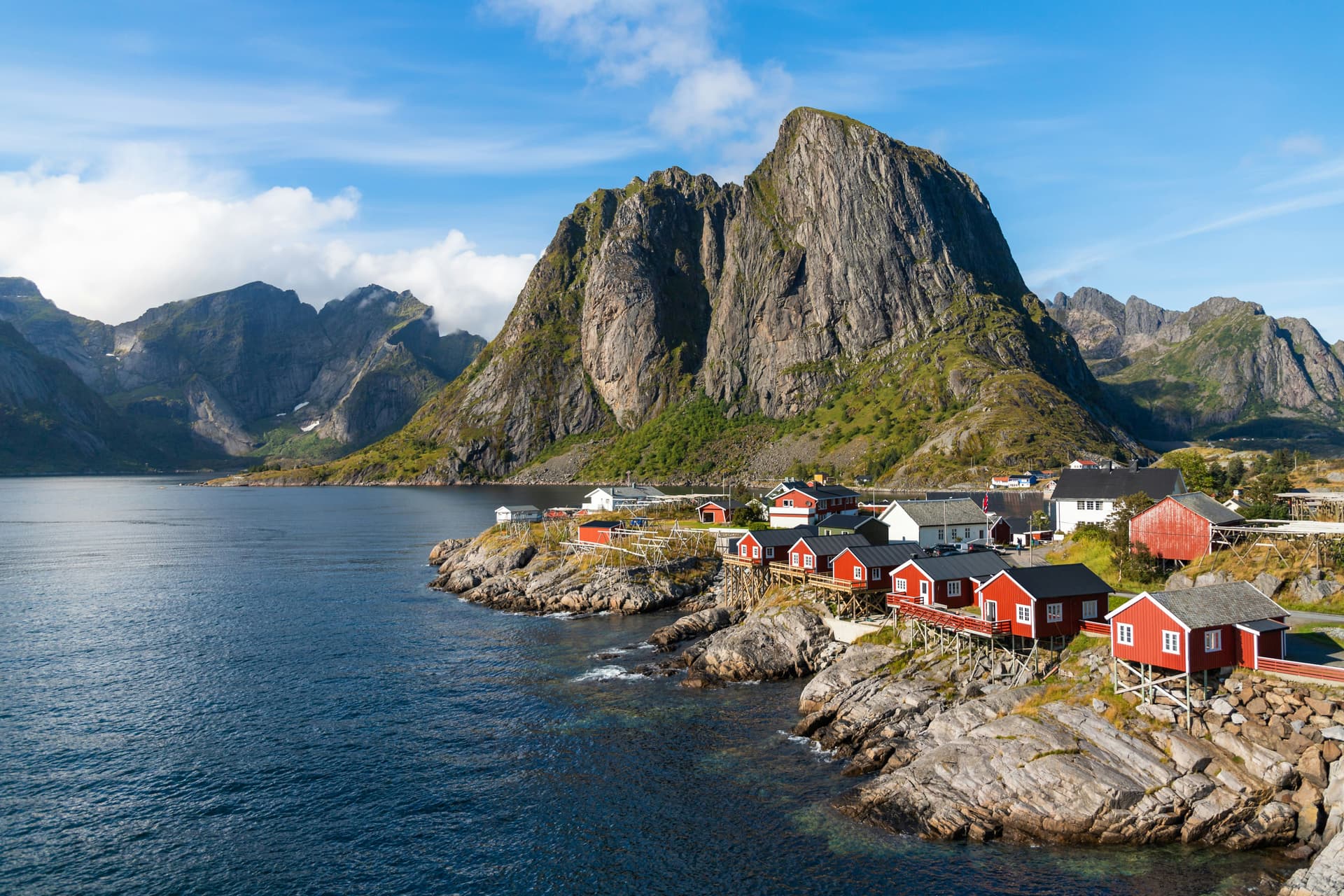
The Lofoten Islands form an archipelago in northern Norway, beyond the Arctic Circle, in Nordland County. Rocky peaks plunge directly into the sea, framing fishing villages with red houses on stilts — the rorbuer. The archipelago is renowned for its winter northern lights, summer midnight sun, and fish-rich waters that have shaped a dried cod economy spanning several centuries.
Practical Information at a Glance
- Main access: Flights to Svolvær (SVJ) or Leknes (LKN) from Oslo or Bodø; ferry from Bodø to Moskenes or Svolvær.
- Lofoten Route: The E10 crosses the archipelago east to west, accessible by car or bike.
- Recommended duration: 4 to 7 days to explore the main islands at a leisurely pace.
- Best time to visit: February–March for northern lights and skrei fishing; June–July for midnight sun and hiking.
- What to wear: Layering essential year-round; waterproof gear even in summer.
What to See
The archipelago stretches roughly 160 km. Landscapes shift between narrow fjords, white-sand beaches (Utakleiv, Haukland), and peaks over 1,000 metres high. The villages of Reine, Å, Henningsvær and Nusfjord hold most of the architectural charm. At sea, white-tailed eagles, otters and orcas are regularly spotted in winter.
History and Context
The Lofoten Islands have been inhabited for over 6,000 years. In the Middle Ages, they became the centre of dried cod (stockfisch) trade across Southern Europe, particularly via the Hanseatic League. This tradition endures: each winter, thousands of Arctic cod (skrei) return to the Lofoten to spawn, still attracting fishers and buyers worldwide today. The Fishing Museum in Å traces this multi-century history.
Highlights of Your Visit
Reine and Reinebringen
Reine is often cited as Norway's most photographed village. The Reinebringen trail (approximately 450 m elevation gain) offers panoramic views over the fjords and surrounding islets. The climb is steep; fixed ropes are installed on the most technical sections.
Henningsvær
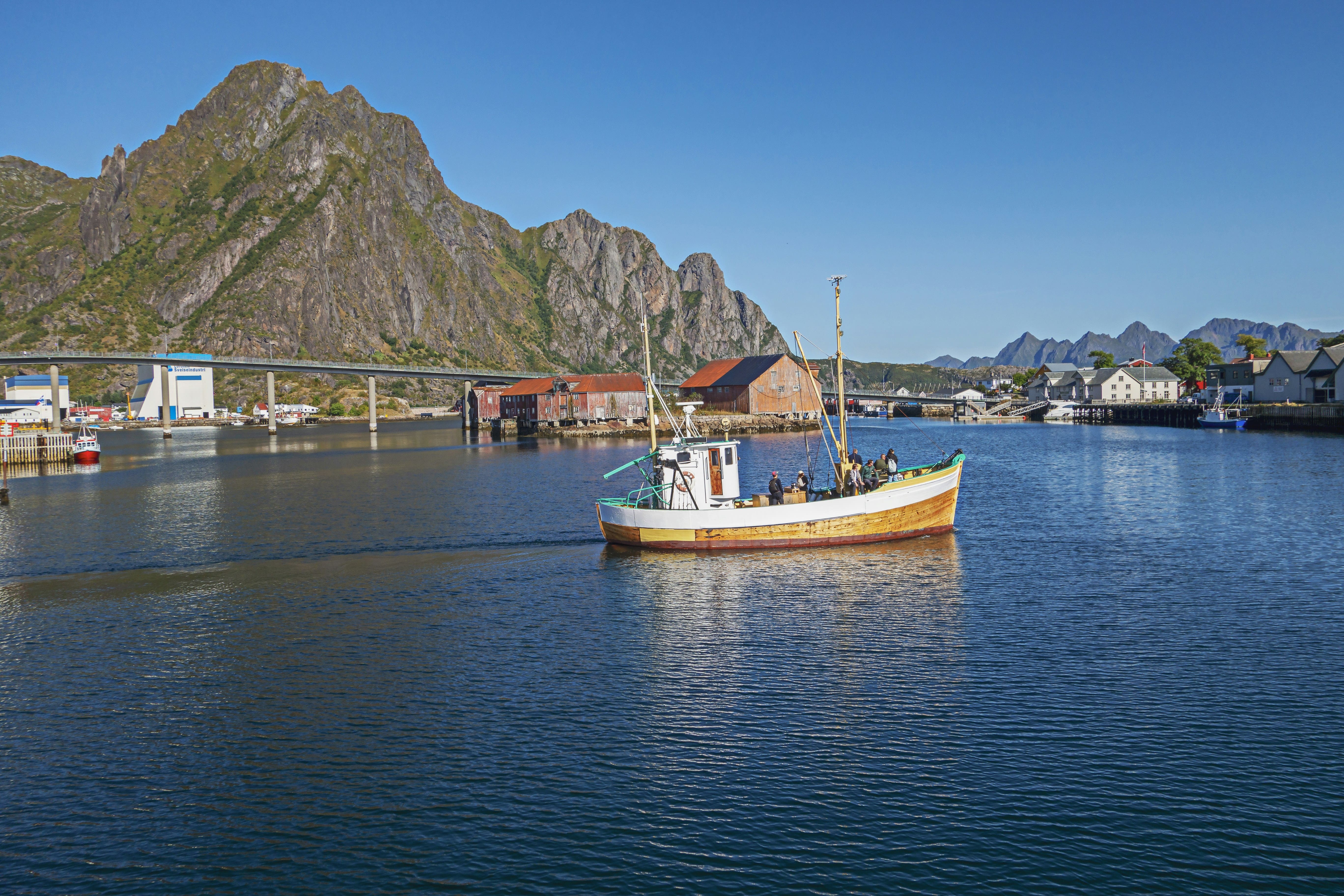
This fishing village built across several islets linked by bridges hosts art galleries, fish restaurants and a football pitch suspended above the sea. It remains one of the archipelago's most active ports.
Nusfjord
Listed among Norway's best-preserved villages, Nusfjord features 19th-century rorbuer still standing. Village entry is fee-based; cabins are available for nightly rental.
Northern Lights
From late September through early April, clear nights frequently reveal northern lights. The absence of light pollution in isolated fjords makes it one of Norway's premier viewing sites.
Midnight Sun
From late May through mid-July, the sun never sets. The low-angle midnight light casts landscapes in golden tones especially prized by photographers.
Photography Tips
Summer's golden midnight light is ideal for photographing Reine from the waterfront. In winter, face north once the Kp index exceeds 3 for aurora shots. Henningsvær photographs best from a drone or from the main bridge in late afternoon. Avoid midday hours in summer: light on white facades becomes too harsh.
Location and Access
The archipelago lies in Nordland County, approximately 300 km north of the Arctic Circle. The E10 connects Fiskebøl in the east to the village of Å at the far west. Bodø, on the mainland, is the primary gateway via ferry or plane. Regional buses serve villages along the E10, but a rental car offers the most flexibility. Some road sections are narrow; winter driving requires winter tyres.
Nearby
- Vesterålen Islands — neighbouring archipelago to the north, renowned for summer whale watching.
- Bodø — mainland departure city, home to the Aviation Museum and Saltstraumen, one of the world's strongest tidal currents.
- Tromsø — approximately 3 hours by flight, Norway's Arctic capital and base for northern lights safaris.
Frequently asked questions
It depends on your priorities. February–March combines northern lights, skrei fishing and snowy landscapes. June–July offers midnight sun, milder temperatures and accessible hiking. September is a pleasant in-between period for autumn colours and early aurora sightings.
A car is strongly recommended to explore the archipelago at your own pace. Regional buses operate on the E10, but frequencies are limited, especially outside peak season. Biking is a popular option in summer on flat sections.
Yes, from late September through early April, whenever skies are clear and solar activity is sufficient. The absence of light pollution in isolated fjords favours observation. No guarantee is possible: plan for multiple nights on site.
Yes. The E10 remains open year-round, though some secondary passes may close after heavy snowfall. Winter tyres or chains are mandatory on vehicles during winter.
Allow a minimum of 4 days to cover the main villages (Svolvær, Henningsvær, Reine, Å). A week enables you to add hiking, boat excursions and detours to the western beaches.
The rorbuer (fishing cabins on stilts) are the archipelago's iconic accommodation, available at Nusfjord, Reine, Sakrisøy and elsewhere. Hotels and hostels exist in Svolvær and Leknes. Book early during peak season (June–August).
Interested in this visit?
We can include it in your personalised itinerary.