Flakstad Church
Built in 1780 from pine logs, Flakstad's red church is among the oldest in the Lofoten Islands. Facing the fjord, surrounded by mountains and a seaside cemetery, it embodies the Lutheran simplicity of Norwegian fishing communities.
Flakstad Church stands on the island of Flakstadøya, at the heart of the Lofoten archipelago. Built in red wood during the 18th century, it ranks among the rare log churches in Norway still in active use. Its cemetery facing the sea and mountains as a backdrop make it a place steeped in history and Lutheran restraint, representative of the fishing communities that shaped the Lofoten.
Practical information at a glance
- Access: by car via the E10, the main road through Lofoten; parking available nearby.
- Dress code: appropriate attire required inside; shoulders covered recommended.
- Suggested duration: 20 to 40 minutes for the church and cemetery.
- Admission: access to the church is generally free outside service times; check local opening hours.
What you'll see
The log structure painted in ochre red contrasts sharply with snow-capped white mountains and the blue of the fjord. The interior, spare and luminous, retains period wooden furnishings and an atmosphere of intact contemplation. The adjoining cemetery, with its headstones facing the sea, bears witness to generations of fishermen buried here.
History and context
The current church dates to 1780. It replaced an earlier building and was constructed from pine logs imported from Russia—a rare material in an archipelago almost devoid of forests. This round-log construction technique is characteristic of rural Norwegian churches of the period. The Flakstad parish served fishing communities scattered across several islands.
Highlights of your visit
The red facade and its natural setting
The church's vivid red stands out against the mineral landscape of the Lofoten. This chromatic contrast is particularly striking in winter, when snow blankets the roofs and surrounding peaks.
The maritime cemetery
Graves extend to the fjord's edge. Some headstones bear the names of fishing families present in the region for centuries. A place of memory both austere and powerful.
The wooden interior
Painted wooden pews, galleries, and pulpit compose an interior typical of 18th-century Norwegian Lutheranism: no superfluous ornament, natural light, warm acoustics.
Etiquette and visiting rules
- Maintain silence and discretion inside, especially during services.
- Appropriate attire required; avoid shorts or beachwear.
- Do not disturb religious or funeral ceremonies.
- Respect the cemetery: do not walk on graves.
Photography tips
Raking morning or late afternoon light accentuates the red of the facade. In winter, the golden light of the Arctic blue hour offers exceptional conditions. Frame from the cemetery to include the fjord in the background. Inside, photographs are generally tolerated outside service times; remain discreet.
Location and access
The church is located in Flakstad, on the island of Flakstadøya, accessible by the E10 road that runs through the entire Lofoten archipelago. The village of Reine lies a short distance to the west. Nusfjord, a listed fishing village, is also nearby. Public transport is limited; a rental car remains the most practical way to explore this part of the Lofoten.
Nearby attractions
- Reine — fishing village at the foot of vertical cliffs, one of Lofoten's most photographed sites.
- Nusfjord — preserved former fishing village, inscribed in Norwegian heritage, with traditional rorbu cabins.
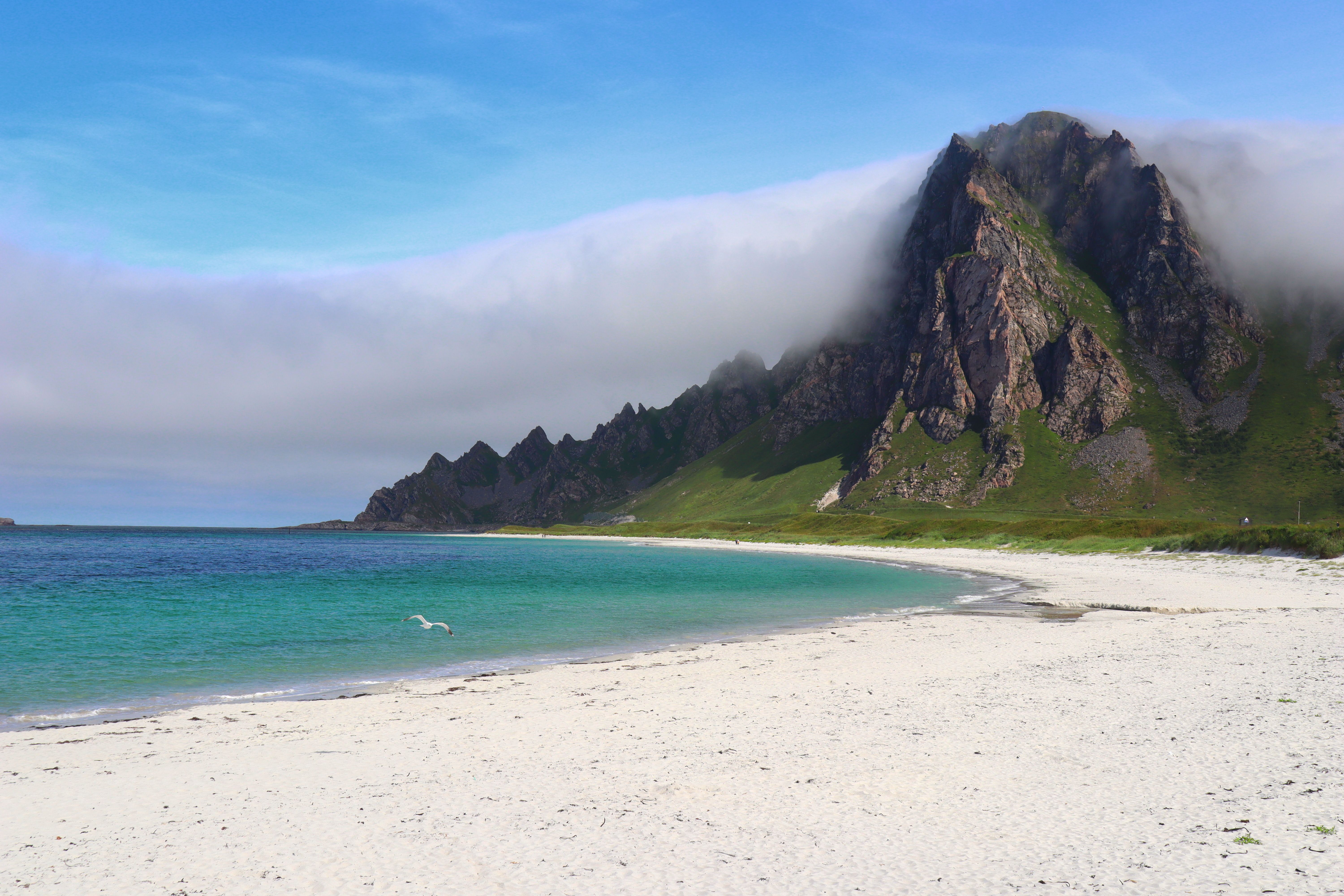
- Ramberg — white sand beach with turquoise waters, surprising at these Arctic latitudes.
- Sund — small fishing hamlet with a forge-museum dedicated to local craftsmanship.
Frequently asked questions
The church is generally accessible outside religious services, but opening hours vary by season. Check with the local tourism office or parish before your visit.
Summer (June-August) ensures easy access and extended daylight. Winter offers a spectacular snowy setting and the possibility of viewing the Northern Lights, though days are very short.
Yes. Flakstad lies on the E10 road connecting Nusfjord, Ramberg, and Reine. Half a day is sufficient to visit the church and explore neighboring villages by car.
Photography is generally permitted inside outside service times. Remain discreet and turn off your flash to preserve the atmosphere of the space.
Appropriate attire is expected: shoulders covered, no shorts. The church remains an active place of worship.
Interested in this visit?
We can include it in your personalised itinerary.